
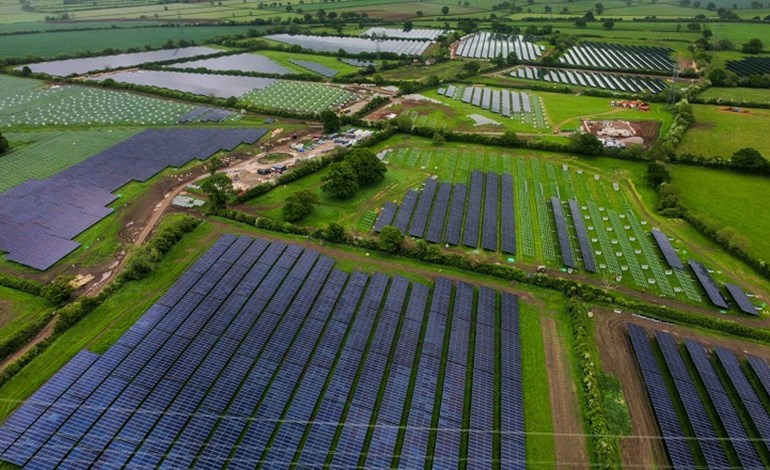
Cero Generation with UK development partner Enso Energy has completed the energisation of the first solar farm to connect directly to the UK transmission network. This follows installation of new switchgear at the 50MW Larks Green solar farm site by Cero and Enso in collaboration with National Grid, and the running of a high voltage cable between the substation and solar farm, which has enabled connection to National Grid’s Iron Acton substation near Bristol. The solar plant comprises 152,400 solar modules installed in a 200-acre plot. The project will be co-located with a 49.5MW / 99MWh battery energy storage system (BESS), which is expected to reach financial close shortly. By storing energy during peak power generation and exporting it back onto the grid when demand is high, the BESS will balance the intermittent energy production, maximise the site’s efficiency and allow a greater output of clean energy. Until now, all of the UK’s solar farms have connected to the country’s distribution networks – the lower voltage regional grids that carry power from the high voltage transmission network to homes and businesses. Connecting solar power directly to National Grid’s transmission network allows clean energy to be transported over greater distances and opening a gateway for larger projects to connect to the grid. The announcement marks progress towards meeting Britain’s commitment to a fully decarbonised power system by 2035. The government’s recent Powering up Britain report reaffirmed its ambition for a five-fold increase in deployment of solar generation by 2035, with up to 70GW installed. The design and layout for the co-located solar farm and BESS will produce a net biodiversity gain. This will be achieved through the provision of a range of resources for local wildlife, including additional woodland planting, that will provide shelter and food for a range of protected species. Chief executive of Cero Generation Marta Martinez Queimadelos: “The Larks Green project is not only a significant milestone for Cero and an opportunity to initiate our BESS pipeline, but it represents a significant contribution to the UK’s goals to reach net-zero.” Co-founder and director of Enso Energy Ian Harding added: “The connection of this solar farm at Larks Green is the culmination of a lot of hard work by all the Enso, Cero and National Grid teams involved. “Completion of this project is a major milestone for renewable energy in the UK and provides further evidence that co-located solar and battery storage projects connecting directly to the transmission network will play an important role in the delivery of the UK’s net zero plans.” Cero has 38 other standalone or co-located BESS projects in its UK pipeline within its partnership with Enso. The joint venture’s existing pipeline extends to 5GW, and a further 5GW of early-stage opportunities. Credits: renews.biz [Image: Enso]
ERG Adds 149MW Solar Farm To Spanish Portfolio
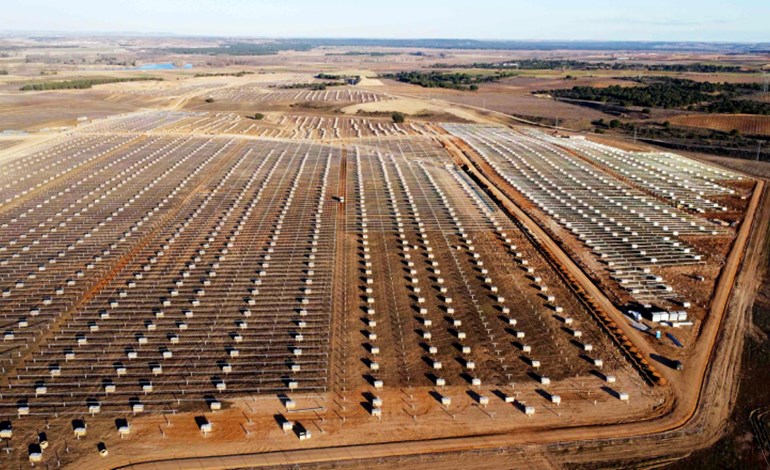
ERG has acquired a 100% stake in Garnacha Solar, the owner of a 149MWp solar project located in Castilla and Leon, Spain. The farm is currently in an advanced phase of construction and is expected to reach commercial operation by the end of 2023. The Garnacha solar power farm, equipped with latest-generation bifacial panels and tracker system, will have a load factor of around 22% and an estimated total annual production of around 280GWh. 70% of the electricity generated by the plant will benefit from a 12-year pay-as-produced power purchase agreement (PPA) with a leading corporate counterpart. The value of the transaction in terms of enterprise value is €170m, with an equity value of €80.5m euros. The transaction is expected to close by the third quarter of 2023. Paolo Merli, ERG CEO, commented: “The acquisition of the Garnacha solar power plant, the largest in terms of capacity in the group’s renewable portfolio, consolidate our presence in Spain where we will reach 266MWp of installed capacity by the end of the year, with over 1 GW of under development solar pipeline. “Through this transaction, ERG achieves an important positioning in the country, with possible future industrial synergies, as part of the geographical and technological diversification process envisaged in the 2022-2026 Business Plan.” Credits: renews.biz [Image: Ib Vogt]
Solar Energy UK Backs Call To Speed Up Connections
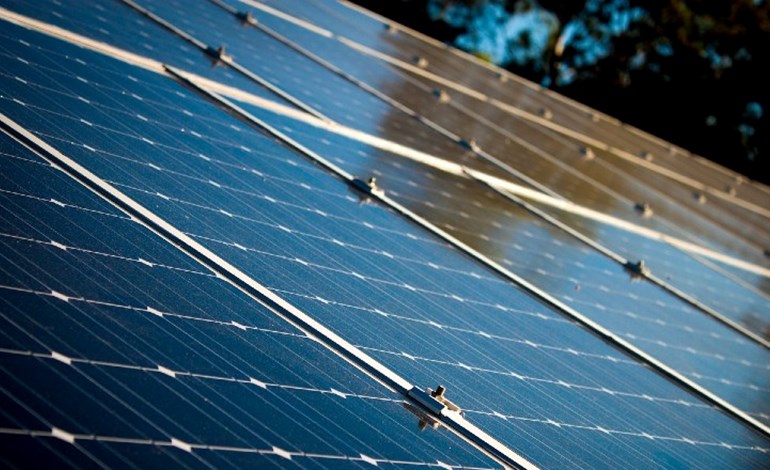
Solar Energy UK has welcomed the Commons’ Environmental Audit Committee’s demand for shorter waiting times to connect solar and battery projects to the grid. The committee laid out recommendations on how the UK government can achieve its ambition to install 70GW of solar generating capacity by 2035, calling for better collaboration to address grid constraints and access to capital for households. Committee chair Philip Dunne warned that if action were not taken “with some urgency, there is likely to be a very considerable shortfall” on the government’s target. “There is potential for solar energy to have a bright future in the UK, but a dark cloud of delays for the industry hinders the ability to meet its full potential,” he added. Solar Energy UK warned that waiting times for large solar projects’ connection to the electricity grid, both on roofs and ground, can often stretch well into the 2030s. According to the committee, this is due to historical underinvestment, the way connection applications are managed, “unresponsive” distribution network operators and “a regulatory failure with Ofgem failing to prioritise net zero”. MPs are seeking urgent short-term solutions to these problems. Their demands include a new mission statement for Ofgem requiring grid operators to speed up investment. Solar Energy UK chief executive Chris Hewett stated: “It is grossly unacceptable that solar projects with planning consent and with finance ready to go can told to wait more than a decade simply to connect to the grid. The situation is causing billions of pounds of economic damage to the UK.” Credits: renews.biz [Image: Pixabay]
GreenGo Development Pipeline Exceeds 1.5GW
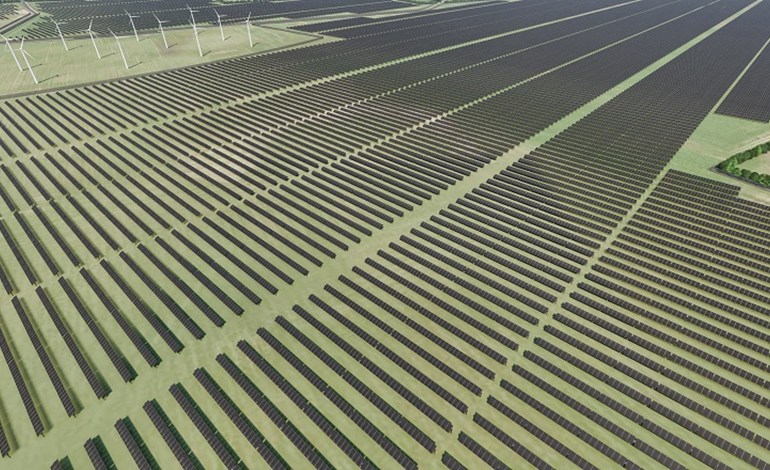
Italian developer GreenGo has 1630MW of renewables capacity in development, spanning seven different Italian regions, from Sicily to Veneto. Southern Italy is the leading territory for the company’s activities, with Sicily in the lead, followed by Puglia and Calabria. The most recent development projects in the first four months are in central and northern Italy and comprise 12 projects, totalling 127MW. Out of the 1.6GW, 1GW of capacity is underdoing permitting and authorisation. “Compared to the 1000MW with ongoing permitting, there are 12 projects that have positively passed the EIA for a total of 423MW and, of these, 162 have already been dismissed with the concluding Sole Authorization or PAUR permit,” said Fabio Amico, Director of Development and Engineering at GreenGo. He added: “More than half of the MW of this first milestone comes from the agri-photovoltaic sector (57%). “The advanced pipeline also underscores our multi-tech approach. We have submitted projects for wind (27%), storage (12%) and ground-mounted photovoltaic (4%) plants.” Giuseppe Mastropieri, CEO of GreenGo, added: “The success rate of GreenGo’s projects, in terms of actual installable power, is 91%, calculated on the 474MW that passed the Environmental Impact Assessment, a rate that makes GreenGo one of the most reliable developers in the renewables sector.” Credits: renews.biz [Image: GreenGo]
TGC Snaps Up CleanChoice
True Green Capital Management LLC (TGC), has acquired a majority stake in CleanChoice Energy. The acquisition will fuel CleanChoice’s growth as the first 100% independent green gen-tailer in the US, operating at both ends of the value chain by owning solar generation assets and selling renewable energy to customers in multiple competitive markets across the country. TGC will maintain the CleanChoice brand and team and invest an additional $100m of capital into developing, acquiring, owning, and operating CleanChoice solar projects. CleanChoice currently has a development portfolio of over 300MW in various stages of development and is pursuing acquisition and co-development opportunities across its territories of focus. The deal will expand TGC’s footprint to include solar power generation in 16 US states, including Pennsylvania and Ohio, along with approximately 215,000 residential customers. The initial focus will be in the ISO-NE, NYISO, and PJM markets. “We are excited to welcome CleanChoice into our portfolio,” said managing partner and co-founder of TGC Panos Ninios. “We continue to believe that the combination of green customers with solar power development and asset ownership will be paramount in the clean energy transition regime we operate in. “In CleanChoice, we have found a best-in-class management team with a unique multi-year track record in combining solar power development with a proprietary customer acquisition and management platform.” The acquisition of CleanChoice underscores TGC’s commitment to quickly, reliably, and cost efficiently expand renewable energy generation and demonstrates the attractiveness of a largely untapped opportunity to pair owned renewable generation with retail supply. The combination will enhance CleanChoice’s retail business by securing long term access to power, capacity, and RECs and reducing exposure to wholesale commodity markets, setting up operational savings and differentiated renewable products. “This is a significant milestone for CleanChoice, and it was important for us to find a mission aligned buyer who shares our commitment to empowering customers and building a greener future,” said chief executive of CleanChoice Tom Matzzie. “We have found that in TGC, and we look forward to rapidly expanding our farm-to-table clean energy offerings and, with their support, making clean energy more accessible to more people.” “We are thrilled to partner with CleanChoice on their journey to becoming a fully integrated green utility,” added partner and co-founder of TGC Bo Wiegand. “We see this as a natural extension of our firm’s community solar strategy – providing more customers with access to locally-generated renewable energy, while also enabling high quality retail offtake for our project assets.” CleanChoice’s next five years will be focused on developing, constructing, and operating its project portfolio and providing more consumers with easy, convenient, 100% pollution free energy. The transaction is expected to close in the next 60 to 90 days. CIBC Capital Markets served as exclusive financial advisor for TGC and DLA Piper served as legal counsel in connection with the transaction. Guggenheim Securities, LLC served as exclusive financial advisor and Pillsbury Winthrop Shaw Pittman LLP served as legal counsel to CleanChoice. Credits: renews.biz [Image: Dulas]
European Energy Joins Agri-PV Project
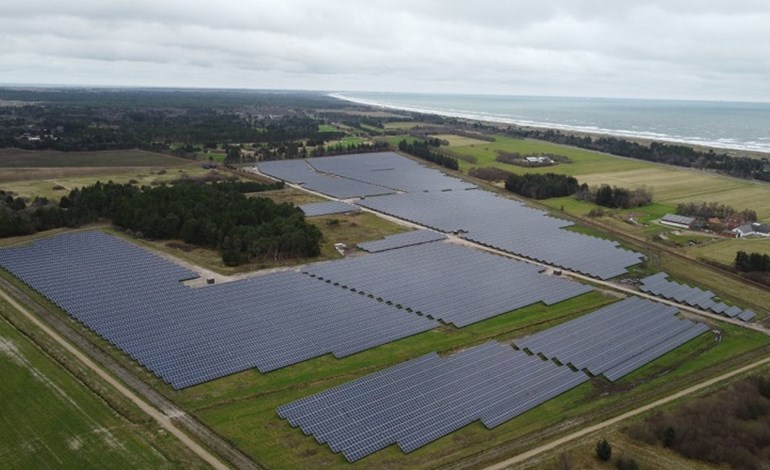
European Energy is part of Danish research project that will investigate the potential of Agri-PV systems, where crop and solar energy production are combined on the same site. The scheme, which will be developed in collaboration with European Energy, Aarhus University, Copenhagen University, and Slagelse Municipality, is co-financed by the Innovation Fund with Dkr22.8m (€3m). The project starts in April 2023, and the installation of the pilot plant at AU Flakkebjerg in Slagelse Municipality is planned for later in the year. Construction of the Agri-PV can commence when a rural zoning permit is obtained, and a decision is expected within the coming weeks, followed by a four-week appeal period. Agri-PV involves the installation of solar panels over agricultural land so that crops can be grown and cultivated rationally under the panel, while renewable energy is generated. The project will explore the potential benefits of Agri-PV, including renewable energy and food production on the same area, intensive use of field robots, increased biodiversity, the technical and economic viability of the system, and the acceptance of farmers and the surrounding community. The project will include the installation of a two hectare pilot plant on a typical eastern Danish agricultural are It will investigate the potential and challenges of growing crops in the plant and monitor its performance over a five-year period. “We are excited to participate in this project to develop and mature the potential of agricultural and energy production, thus establishing a solid foundation for future larger projects,” said head of solar energy innovation at European Energy Mads Lykke Andersen. He added:“This project is an important step towards developing more sustainable and integrated approaches to food and energy production. “In this project, we have the opportunity to uncover the potential for producing energy and food in an advanced Agri-PV setup, using field robots. A strong focus for us has been that the newly established Agri-PV systems must also contribute to increased biodiversity.” Credits: renews.biz [Image: European Energy]

GE To Upgrade Polish Hydro Plant
GE Renewable Energy has signed a contract with PGE Odnawialna to replace the four 125MW pumped turbines and generators of the Porabka Zar hydro storage plant in Poland. The upgrade aims to extend the lifetime of the hydropower plant for several decades by replacing the +40-year-old turbines with new, reliable and high efficiency pumped turbines and motor generators. Porabka Zar is the second largest pumped storage power plant in Poland with an installed capacity of 500MW. The commercial operation of the four units is expected beginning of 2028. GE Hydro Solutions will be responsible for the design, manufacturing and supply of the new equipment as well as the excitation and governing systems. GE will also supervise the erection and commissioning of the four new units and will replace the existing stay rings as well as the existing stay vanes by new ones specially designed for Porabka Zar. Due to the confined workspace and technology used, the cutting and welding processes will be specific to this project. “This rehabilitation project is the first large-scale rehabilitation project of its kind in Poland in 40 years,” said president and chief executive of GE’s Hydro Solutions Pascal Radue. “We are delighted to be part of it and support PGE Odnawialna in this upgrade process. This demonstrates that Poland makes every effort to achieve the Net Zero goal by 2050,” he added. “This new equipment will help increase the flexibility and reliability of the plant and consequently stabilise the grid in the country.” Credits: renews.biz [Image: GE]

Viability Of UK Renewables ‘In Danger’ Unless Government Acts
The UK risks failure in its mission to decarbonise its power sector by 2035 unless government takes action to better support the delivery of renewables, a parliamentary report has warned. “Enhanced political leadership” is required to address barriers to deployment and make the UK a more investable market to developers, according to the BEIS Committee’s Decarbonisation of the Power Sector review, published today (28 April). The report warns the investment proposition for UK low-carbon electricity has “deteriorated” in the past 12 months, which “risks putting the viability of many renewable projects in danger”. “The global race for capital in low-carbon projects has intensified, and large subsidies have increased the attractiveness of the UK’s competitors,” it states. “The US Inflation Reduction Act and international responses to it are leading to a significant market shift. “Meanwhile developers of renewable energy projects in the UK are facing substantial cost inflation and windfall tax exemptions less generous than those given to the oil and gas sector.” Trade body Energy UK said the findings echo concerns raised by industry in recent months, warning the government needs to “quickly acknowledge and respond to the challenges that have grown for low-carbon developers”. Deputy advocacy director at the group Adam Berman said: “The rising costs faced by renewables projects have not been reflected in the next Contracts for Difference auction, which risks us falling further and further behind in delivering the amount of clean domestic power we urgently need to ensure our energy security, cut bills, and reduce emissions. “In addition to that, we have a windfall tax that gives favourable treatment to oil and gas companies over renewables developers at the very time when there is increasing competition for green investment from the United States and Europe. “The real and present fear is that if we don’t move quickly to improve the investment climate, that money will find a home elsewhere.” Regen chief executive Merlin Hyman added: “The message of today’s report is loud and clear: policy uncertainty and the absence of a clear delivery plan is putting the 2035 net zero power target at serious risk.” The REA (Association for Renewable Energy and Clean Technology) welcomed the report’s focus on accelerating the delivery of renewable energy technologies, including the call for government to address deployment barriers such as “unacceptable” planning and grid delays. REA chief executive Dr Nina Skorupska said: “As well as streamlining the current pipeline of renewables, the UK must act decisively to ensure that green investment is not diverted away from the UK to other jurisdictions.” The group added “sensible discussions” need to be had on the topic of bioenergy amid recent controversy highlighted by the review surrounding the sustainability of wood pellets used to produce electricity. The BEIS Committee has urged Westminster to provide a response to the emerging competition from abroad while paying “a more active role” in delivering upgrades to the transmission network and speeding up the consenting process for new projects. “For too long, policies for the power sector have been designed in silos, without adequate consideration of how they all interrelate and fit together,” it added. It also called for a de facto ban on onshore wind in England to be overturned and for a heightened focus on ensuring the UK’s ports have the capacity to support the rollout of offshore wind infrastructure. A spokesperson for the Department for Energy Security and Net Zero (formerly BEIS) said: “We are taking real decisions to benefit this country: to deliver a secure, low-cost and low-carbon energy system, to decarbonise the UK’s electricity system by 2035, and to reduce energy bills across the UK. “The government’s support for investment in new renewable technology means we are leading the world in reaching net zero. We start from a strong position, having delivered the world’s four largest operational offshore wind farms as part of a clean energy miracle since 2010, and we have also installed enough solar to power over four million homes.” Credits: renews.biz [Image: Unplash/Jamie Street]
SUSI-Eelpower Flicks Switch On 50MW Scottish Battery
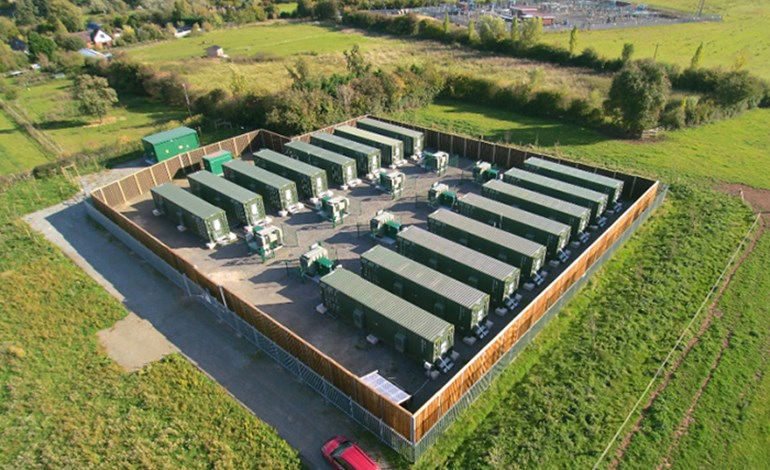
SUSI-Eelpower, a joint venture between SUSI Partners and Eelpower, has brought the largest standalone operational battery storage project in Scotland online. Located in Dundee, the Dunsinane asset has a capacity of 50MW. The JV has selected EDF as its trading and optimisation partner, which will provide market access and optimise operations via its market leading trading platform across all available revenue streams including balancing mechanism, trading, and ancillary services. Dunsinane will play an important role in decarbonising energy by providing balancing services to National Grid which will allow the integration of greater levels of renewable generation. Chief executive of Eelpower Mark Simon welcomed the site entering commercial operations: “Dunsinane is the first of a series of large battery assets which will transform the ability of the grid to balance the rapid growth in intermittent renewable generation and help manage constraints at this critical part of Britain. “With EDF’s support, the site will deliver on the promise that flexible battery assets represent for Scotland.” “We are delighted to be partnering with SUSI-Eelpower ensuring they have a route to market for the first Scottish distribution connected battery,” added head of energy trading services at EDF Stuart Fenner. “Battery storage plays a huge part in the road to net zero and helping to decarbonise our energy system and this is a major milestone for Scotland, as well as easing pressure on the National Grid.” SUSI-Eelpower’s Dunsinane asset starting commercial operations comes after the commissioning of a 10MW battery in Winchester, England, earlier this year. The Winchester site is part of the Constraint Management Zone around the Rownhams grid supply point in Hampshire and will provide stability to a key congested part of the national electricity grid. Credits: renews.biz [Image: Eelpower]

UK Investors Form 5GW Green Hydrogen JV
Clean energy investor PASH Global and ERIH Holdings (ERIH) have formed a 50-50 JV to develop and invest green hydrogen and ammonia projects totaling 5GW of electrolyser capacity. The project will be powered by 10GW of renewable energy generation capacity such as solar, wind, and geothermal in Italy, Spain, Turkey, Greece, Serbia and Colombia by 2030. This will be entirely consumed for captive needs of round-the-clock power and intermittent energy for green hydrogen. Akin Gunduz, chief executive of ERIH Holdings, said: “Building the Next-Generation Utility is the vision of the JV. “Without hydrogen there can be no energy transition, no climate neutrality, and no move away from fossil fuels. Within this respect, for our hydrogen-related investments, we focused on opportunities that are likely to find their way to market in the next 5–10 years and are not as dependent on substantial, coordinated long-term government subsidies that have yet to be designated or allocated.” Vine Mwense, executive director and co-Founder of PASH Global, added: “The JV presents an exciting opportunity that would bring together our unique strengths and provide a scalable platform to supply our customers with affordable, reliable and ever-cleaner energy.” The next step is to work together with potential partners to develop commercial and technical concepts in the first two projects located in Turkey and Italy. Credits: renews.biz [Image: Enel Green Power]