
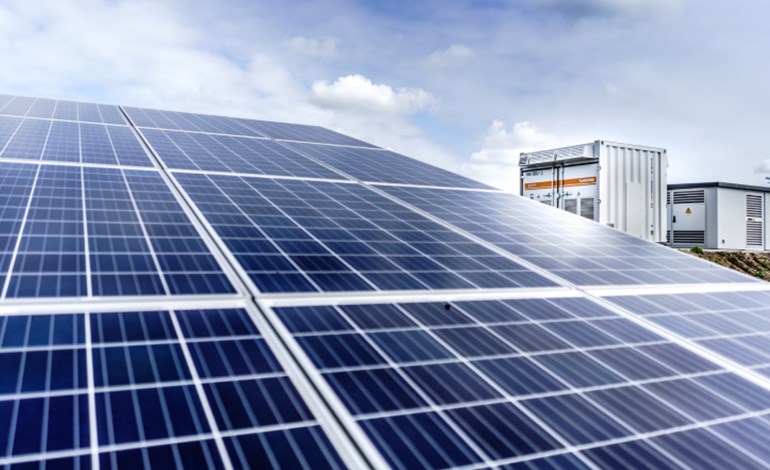
SSE Renewables is to submit a planning application for a proposed 21MW solar farm project to be co-located adjacent to its existing 27MW Richfield Wind Farm in Ireland’s “Sunny South East”. The paperwork, which is being submitted to Wexford County Council, proposes the development of an array on a 44-hectare site in the townlands of Hooks and Yoletown in south Wexford. The proposed solar site is near the existing 18 turbine Richfield Wind Farm which has been in operation since 2006. Submission of a planning application follows a period of local public consultation on the project, which took place earlier this year. The proposed hybrid co-located development solar farm alongside the existing wind farm could increase the typical annual renewable energy output from Richfield by around 25%, enough to power an additional 4500 Irish homes annually. In addition to increasing the renewable energy output from Richfield, a combined wind and solar asset at the site would be more productive and resilient, because it will be capable of contributing power to Ireland’s grid at times when the sun shines but when the wind does not blow said the developer. This could further support efforts to meet Ireland’s target of generating 80% of its electricity from renewable sources by 2030. The proposed solar plant will have a hybrid grid connection with Richfield Wind Farm. The development of the project will be subject to changes in Ireland’s current grid connection consenting regime to allow for “hybrid” technology grid connections to facilitate co-location of wind and solar generation sources. Delivery of the project is also subject to securing an economic route to market ahead of a final investment decision expected around early 2026. Should the project secure all its consents and progress to delivery, SSE Renewables will plant 15% of the site area with native woodland species as per its own Biodiversity Net Gain targets and also in line with requirements set out in the Wexford County Development Plan 2022-2028. Senior project manager at SSE Renewables Garry Brides said: “The submission of this exciting project for planning permission comes at a time when Ireland is looking to secure more renewable energy. “This project is a perfect example of how we can expand the renewables output for Ireland by leveraging existing wind farm assets for the development of adjacent solar farm projects such as this. “If co-located projects like Richfield Solar are to help deliver Ireland’s climate goals, industry will require more certainty as to how the regulatory framework will be evolved to support these developments. “At present, we lack the necessary policy to underpin these kinds of hybrid technology grid connections. “We stand ready to work closely with key government and regulatory stakeholders to remove any remaining barriers to the delivery of hybrid connections, and so support the delivery of important solar and battery technology projects co-located at wind farm sites.” Credits: renews.biz [Image: SSE Renewables]
Bute Proposes Rural Welsh Renewables Network
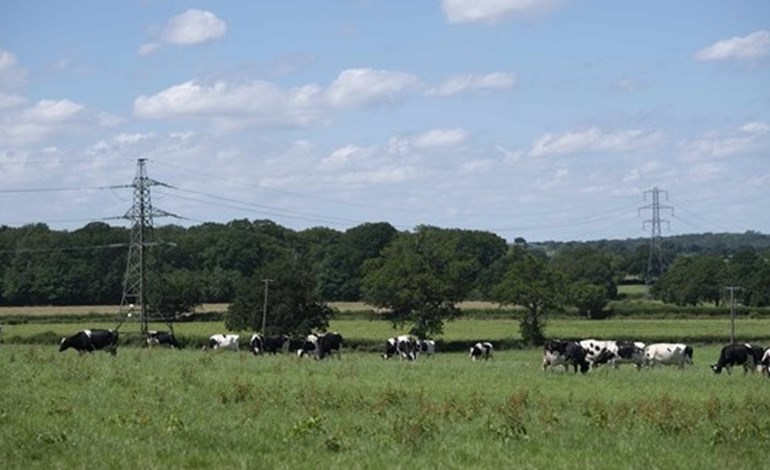
Green GEN Cymru, part of the Bute Energy Group, is announcing Green GEN Vyrnwy Frankton, a renewable energy network in Wales which will connect clean, green energy to the National Grid and help rural communities decarbonise heat, power and transport. The project will link Bute Energy’s proposed 165MW Llyn Lort Energy Park and a number of other sites in the early assessment and feasibility stage, to the National Grid at a point near Lower Frankton in Shropshire. The Welsh and UK governments have set clear targets for more renewable energy, helping to combat climate change. In Mid Wales the existing electricity network does not have the capacity to connect new renewables to homes and businesses, Green GEN Cymru said. Green GEN Vyrnwy Frankton has been launched to meet this need, with an aim to contribute to a more resilient and reliable network for the region. It could reduce pressure on the existing electricity grid, supporting green businesses and enabling green heating, and the roll out of electric vehicles across rural Wales, according to the company. The project could also allow direct connection of community projects and support energy resilience. It has the potential to support technologies like 5G that could help farmers, schools and businesses to be at the cutting edge of technology while being based in a rural area. It will tackle both the energy crisis and the climate crisis, and empower rural communities through investment, jobs and skills, enabling communities across Wales to live modern electric lives, supporting the Welsh government’s target for electricity to be 100% renewable by 2035. Llyn Lort Energy Park, near Llanerfyl in Powys, is currently being consulted on by Bute Energy. It could generate up to 165MW of clean, green energy, enough to power 144,000 homes per year. The Green GEN Vyrnwy Frankton proposal is for a new 132kV overhead line, supported on 27-metre tall steel lattice pylons. While similar to previous National Grid plans in the area, the proposed pylons are significantly shorter and less bulky, and any visual effects will be significantly reduced as a result, the developer said. The plan also includes a substation near the Llyn Lort Energy Park. The proposed route for the connection was selected based on a range of factors including potential effects on landscape, the environment and communities. Green GEN Cymru is focused on causing the least disturbance to those who live, work and enjoy recreation close to the proposals and is committed to protecting the surrounding environment. A public consultation will run from Wednesday 6 September to Wednesday 18 October. This includes a series of webinars and public events in the local area to provide more information and give people an opportunity to have their say. Credits: renews.biz [ Image: Bute Energy]
Solar Takes Top Spot With 2GW Haul
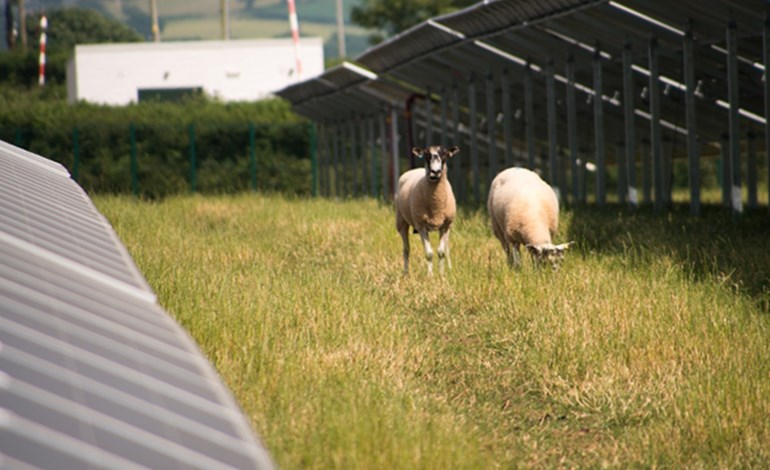
Solar projects totalling just under 2GW have secured CfDs in the latest Allocation Round, the most of any technology. Around 400MW is to be delivered in 2025-2026, 150MW in 2026-2027 and 1.4GW in 2027-2028, according to the results. The strike price for all projects is £47 per megawatt-hour. The largest successful scheme is being developed by Enso in England. The name of the 57MW project has not been disclosed. Fifteen projects of around 50MW were also backed in the round. Lightsource’s Hulam scheme will be delivered in 2027-2028 with CfD backing while JBM won support for a number of schemes including the 50MW Ashorne and Stoneshollow. Low Carbon has been offered contracts for ten solar projects with a capacity of more than 350MWp. Chief investment officer at Low Carbon, Steve Mack said: “Together these projects, coupled with more than 300MWp we secured in last year’s auction, will play an important role in supporting the rollout of solar energy across the UK and provide investment certainty in the solar supply chain as we look to make further progress on reaching net zero. “They will also make a material contribution to the UK’s energy security and cut bills for consumers, while creating further momentum for our own ambition of delivering 20GW of new renewable energy capacity by 2030.” RWE secured four solar and two solar co-located with battery storage renewable energy projects. Katja Wünschel, chief executive for onshore wind and solar Europe & Australia at RWE Renewables, said the auction would “drive forward an ambitious solar portfolio, beginning with the construction of our first solar project in the UK, as one of the country’s leading solar energy partners”. She added: “It’s an important success for the teams supporting those technologies, especially those behind our rapidly expanding new solar business in the UK. “The expansion of renewable energies must be swift and decisive if we’re to achieve the government’s net zero targets and RWE is playing its part by targeting the rapid deployment of an exciting pipeline of new onshore and solar projects.” Chris Hewett, chief executive of Solar Energy UK, added: “We are pleased that so many solar projects have been successful in AR5, particularly as solar has only recently been able to participate. “This shows how resilient solar has become to economic shocks. It remains the cheapest way to generate power in the UK. “That said, we need to be roughly doubling the pace of solar installations to meet the Government’s capacity target of 70GW by 2035. “CfDs are far from the only route to market for utility-scale solar. Some developers will prefer to sell on a merchant basis or seek a long term power purchase agreement. “The AR5 results are therefore not a cap on deployment of solar farms and we are seeing record high rooftop solar installation in 2023.” Credits: renews.biz [Image: Lightsource]
Engie Secures Romanian Solar VPPA
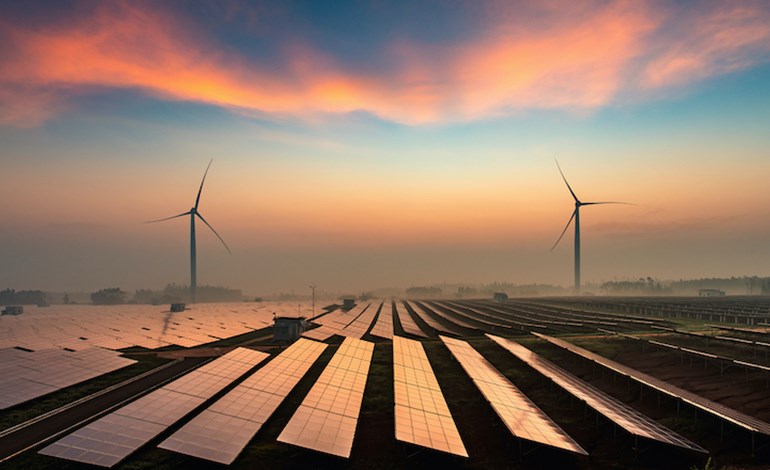
Orange Romania has signed a 6-year virtual PPA with Engie covering 30GWh of its annual electricity needs with green energy from solar technology. By signing the vPPA, Orange and Engie Romania have partnered in a joint project that supports Orange companies in Romania in achieving carbon neutrality by 2040, the target set by the Orange Group’s strategic plan – Lead the Future. Liudmila Climoc, chief executive of Orange Romania, said: “We are aligned with the objectives of the Orange Group and continue to integrate sustainability at the heart of our actions, in order to reduce our impact on the environment. “Decarbonisation and the use of more renewable and sustainable energy sources is a priority for us, along with using resources efficiently through reuse and recycling. “Thus, the signing of the vPPA contract with Engie Romania is another important step in the long-term commitment that Orange has assumed, to contribute to the sustainable development of society. “This approach involved a lot of work on the part of our teams, which I congratulate.” Credits: renews.biz [Image: Engie]
Voltalia Commissions Portuguese PV Complex
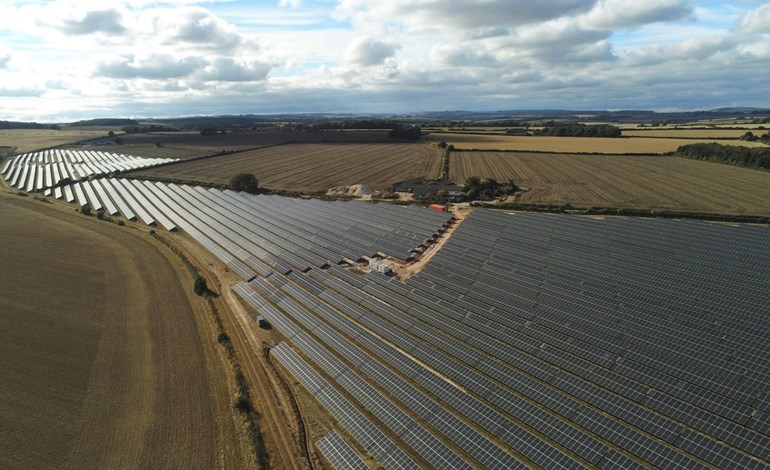
Voltalia has completed commissioning of its new Portuguese Garrido scheme consisting of five solar power plants for a total capacity of 51MW. Construction of the Garrido Project Complex began in September 2021. The site has reached full power after a phased commissioning that began in March 2023. The complex began production at the 2.4MW Vale Serrão, 11.8MW Pinhal Novo and 23.8MW Alcochete. The rest of the capacity, comprising the 1.2MW Oliveira de Frades and 11.4MW Antuzede sites, has just been connected to the grid. The entire capacity of the project is secured by long-term corporate power purchase agreements, including the one with BA Glass, a European producer of hollow glass for the beverage and food sector. “We are very pleased to announce the full power of our Garrido complex. “Portugal is a pioneer in Europe with a significant share of renewable energies in its energy mix,” said Voltalia chief executive Sébastien Clerc. “I thank all the teams for having carried out this complex,” added Clerc. Credits: renews.biz [Image:Voltalia]

Ib Vogt Picks Up PV VPPA From Samsung
International solar developer Ib Vogt has been awarded a vPPA under the Corporate Green Power Programme (CGPP) with Samsung SDI Energy Malaysia. CGPP is a virtual power purchase programme implemented by the Energy Commission to enable corporates to procure and consume renewable energy for their sustainability goals. Ib Vogt APAC, headquartered in Singapore, will deliver 29.99MW ac-capacity of clean solar energy to the Korean multinational company. Samsung SDI in Malaysia specialises in the production of rechargeable batteries used for IT devices, automotives, and Energy Storage Systems (ESS). The PPA with Ib Vogt is a major step for Samsung SDI to meet their stated goal of reducing greenhouse gas emissions. The clean energy will be delivered from a 40MWp dc-capacity solar power plant Ib Vogt is currently developing in the Kuala Muda District in Kedah, Malaysia. The PV farm will feature state-of-the-art bifacial solar modules built on a single axis tracker system for optimal performance. The project will produce solar electricity equivalent to the average annual consumption of approximately 15,000 households while saving up to 35,000 tons of CO2 per year. David Ludwig, managing director of Ib Vogt APAC, said: “Supply chain decarbonisation is a key challenge in the energy transition, and it is great to see Malaysia and Samsung SDI taking the lead in Southeast Asia. “Supporting Samsung SDI in decarbonising their industry leading production facilities is a great example of how Ib Vogt can support corporations to meet their renewable energy goals. “We would like to congratulate the experts at Samsung SDI and express our appreciation to all involved parties for their hard work and commitment to advance the transition toward clean energy.” Ib Vogt is developing the project together with their Malaysian partners and will structure the project financing and provide EPC-Management and Asset Management services. The project is in an advanced development stage and construction is scheduled to begin mid-2024. This adds to Ib Vogt APAC’s late-stage development pipeline with a target of 1GW in construction and operation by 2025. Credits: renews.biz [Image: Ib Vogt]
ACWA Power Closes On 200MW Egyptian PV Plant
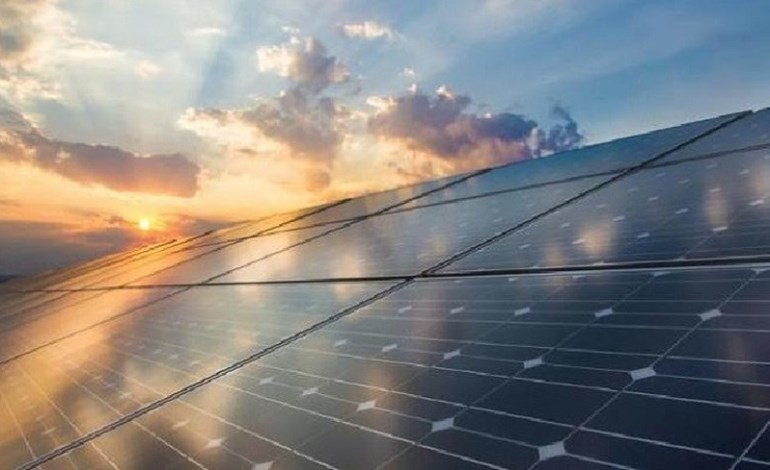
ACWA Power has announced the financial close for the 200MW Kom Ombo a utility-scale solar power plant in Egypt. With an overall investment cost of US$182m, the Kom Ombo plant is expected to be commercially operational in January 2024. Financing institutions for this project include the European Bank for Reconstruction and Development (EBRD), OPEC Fund for International Development (the OPEC Fund), African Development Bank (AfDB), AfDB’s Sustainable Energy Fund for Africa (SEFA), Green Climate Fund (GCF), Arab Petroleum Investments Corporation (APICORP) and Arab Bank. A financial package of US$123m for the project was previously announced in April 2023. The package comprised of loans of up to US$35.6m from the EBRD, US$14.4m from the OPEC Fund, US$14.4m from the AfDB, US$34.1m from the GCF, US$14.4m from Arab Bank and US$10m from the SEFA under the COVID-19 IPP relief programme. The project already has equity bridge loans of US$14m from the EBRD and US$45m from APICORP. Marco Arcelli, chief executive of ACWA Power, said: “We are thrilled to announce the successful financial close of the monumental Kom Ombo solar project in Egypt. “Our commitment to renewable energy solutions has brought us to this momentous juncture. “We are poised to turn our vision into reality. I am thankful for the great support from all the financing institutions involved. “Together, we demonstrate our dedication to driving positive environmental impact and reinforce our joint contribution to Egypt’s energy independence goals.” Once fully functional, the new utility-scale plant will serve 130,000 households, contributing to the Egyptian government’s target to generate 42% of the country’s electricity from renewable energy sources by 2035 while delivering one of the lowest generation tariffs in Africa. Credits: renews.biz [Image: ACWA Power]
RWE Installs PV Plants At German Opencast Mine
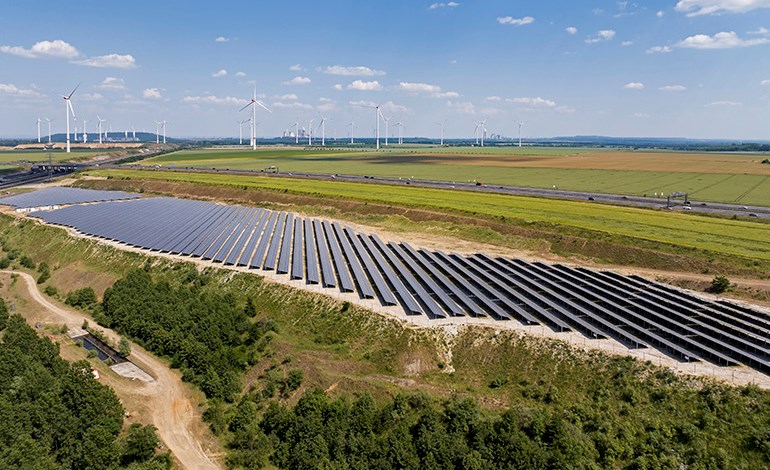
RWE has installed two photovoltaic plants complete with battery storage facilities at the Garzweiler opencast mine in North Rhine-Westphalia, Germany, as part of its country-wide plant concept. The company has installed more than 58,000 bifacial PV modules on a site the size of about 38 football fields that will generate solar electricity for over 7250 households every year. The panels are photosensitive on both sides so in addition to sunlight hitting them directly, they can also utilise light reflected by the ground to the rear side of the modules. “For a clean and reliable electricity supply, we not only need more renewables, we also need battery solutions such as those implemented by RWE at the Garzweiler opencast mine, enabling our citizens to use solar power even after sunset,” said mayor of Bedburg Sascha Solbach. RWE Renewables Europe & Australia chief executive Katja Wünschel added: “Solar power from opencast mines is a model for success. Using them in combination with battery systems is ideal. “This is an integrated and highly successful plant concept that we are putting into practice at several locations simultaneously. “In a short timeframe we have constructed three large-scale solar battery plants on opencast mine sites, and one more is under construction. That represents a further step towards our goal of achieving renewables projects with a capacity of 500MW in the Rhenish lignite mining area by 2030.” The Garzweiler project has a peak capacity of 19.4MWp and 6.5MW of storage capacity. It was set up directly below the Königshovener Höhe Wind Farm, which is operated by the city of Bedburg. The Jackerath site (12.1MWp and 4.1MW battery storage) is located on the western edge of the opencast mine. The battery storage systems are designed for a two-hour charging and supply cycle. “The two locations have a combined area of approximately 38 football fields,” said chief technology officer Lignite at RWE Power Lars Kulik. “This shows it is not only our large-scale recultivation areas that offer plenty of space for renewables but also opencast mine areas that are still in operation. “We plan to use these to ensure the region continues to be an energy producer into the future.” At the Inden opencast mine, the RWE indeland Solar Farm is a similar facility that has been generating solar electricity since 2022 from more than 26,500 solar modules in combination with a battery storage system. The electricity generated there is enough to supply about 4000 German households. RWE is also constructing the RWE Neuland Solar Farm photovoltaic and battery facility at the Hambach opencast mine, and a further solar plant is being planned there. Credits: renews.biz [Image: RWE]
UK Renewables Industry Rejects Market Reform Proposals
The cost of electricity will “inevitably rise for consumers” if plans for an overhaul of the market go ahead, say three UK trade associations representing over 800 renewable energy companies. The plans, called “‘Locational Marginal Pricing”, are being considered by Government and energy regulator Ofgem as part of a wide-ranging review of the electricity market. The scheme would mean that the wholesale price of electricity would vary across Great Britain. It would entail splitting the country into different regions, or zones based on post codes. Prices would be based on local supply and demand, as well as how close power stations are to consumers. A report published today by Cornwall Insight, commissioned by RenewableUK, Scottish Renewables and Solar Energy UK, found that a different approach could achieve Ofgem’s aims to reform electricity markets without risking the loss of billions of pounds of investment in cheap renewable energy. The report focuses on reforming contracts to generate clean power, (Contracts for Difference), to enable them to deliver even more benefits for billpayers. These contracts provide a guaranteed price for power. The Government confirmed this month that solar, onshore and offshore wind provide the cheapest electricity for consumers. The report found that amending these contracts in an incremental and evolutionary way could deliver electricity at the lowest cost to consumers and maintain investor confidence. Six options are proposed by the report, such as paying generators in innovative ways to ensure that supply always meets demand even more closely. RenewableUK’s Economics and Markets Manager Michael Chesser said: “If Locational Marginal Pricing were to be implemented, it wouldn’t only increase costs across our whole energy system, but it would also create a bizarre regional or local post code lottery of prices for consumers, inflating bills in England especially. “We’re already working closely with the Government on a considered approach to reform our electricity market in a stable way, based on evolution rather than revolution, which won’t deter investors, so that we can secure lower prices for consumers and decarbonise our electricity system by 2035.” Claire Mack, Chief Executive of Scottish Renewables, added: “The Cornwall Insight report published today demonstrates the significant potential for the CfD to be reformed while maintaining investor confidence in the UK’s energy transition. “Proposals which would introduce increased uncertainty to the market and undermine investor confidence, such as locational marginal pricing, must be taken off the table. “Only then will we be able to focus on introducing the evolutionary reforms which will secure the billions of pounds of investment required as quickly as possible to decarbonise our economy and reach net-zero by 2050.” Solar Energy UK’s Director of Policy and Delivery Gemma Grimes said: “Over £200bn of investment is needed by 2037 across the electricity sector to deliver on the UK’s climate commitments, so making energy prices more volatile, disrupting investor confidence and increasing the cost of capital at this time would be deeply unhelpful. “Worst of all, it will push up consumer bills, too.” Credits: renews.biz [Image: EDF]

Better Energy Picks Up Danish PV PPA
IT infrastructure supplier Atea has signed a 10-year PPA with Better Energy to offtake energy from a new solar project in Denmark. When connected to the grid later this year, the project is expected to deliver an additional 70GWh per year of renewable energy. The PPA will also allow Atea to offtake one-third of its energy consumption in Denmark. With a long-term agreement for green electricity in place, Atea can also focus on other sustainable practice initiatives, such as working with its partners to recycle and repurpose electronic devices. Andreas Schjølin, sustainability manager at Atea, said: “By partnering with Better Energy, we will help contribute to creating more green electricity, rather than just purchasing the energy that already exists on the grid. “By directly procuring renewable energy through a PPA, companies can showcase their commitment to sustainability and environmental leadership. “It demonstrates a genuine effort to reduce carbon emissions and support the development of clean energy technologies.” Mikkel Thorup, director of PPAs at Better Energy, added: “Atea holds a prominent position in the IT industry, and we are excited to welcome them as a Better Energy partner. “Like many progressive IT and software companies, they are taking the important steps to ensure the energy they consume is green. “As we scale production of renewable energy, there will continue to be opportunities for innovative companies across all sectors to offtake clean electricity and participate in the green transition.” Credits: renews.biz [Image: Better Energy]