
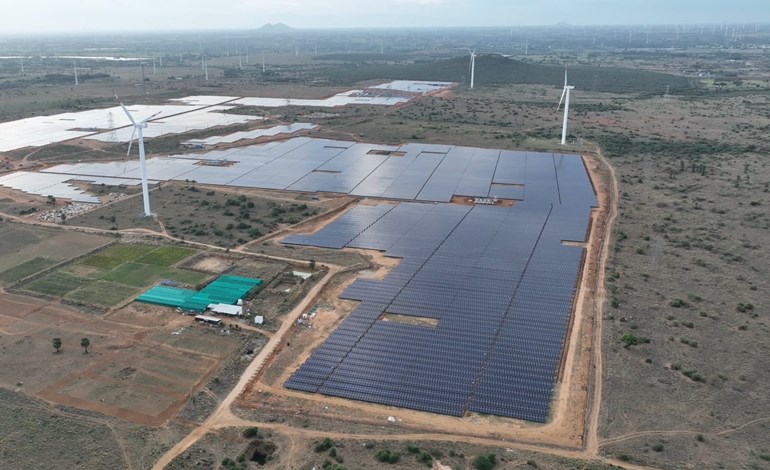
The expansion of solar power in Europe is growing rapidly due to increased renewable energy ambitions and the need to reduce dependence on Russian gas, according to analysis by Statkraft. Statkraft’s Low Emissions Scenario shows that Europe will have significantly more solar power by 2030 than expected before the war in Ukraine. The analysis, which Statkraft has carried out each year for seven years, shows that along with wind power, solar power is asserted as the crucial renewable technology to reduce the European Union’s dependence on Russian gas and cut emissions. It estimates an average yearly increase of solar capacity in the EU of between 45GW and 52GW towards 2030. This is significantly higher than the 33GW per year analysts expected before the invasion of Ukraine and it compares to a record 26GW which was predicted in 2021. Compared to other renewable energy technologies, solar power is cost-efficient, and construction can take less than two years, Statkraft said. According to the report, renewable energy will account for almost 80 percent of the world’s total power generation in 2050. It also predicts that solar will become the world’s largest source of power generation by around 2035 and will produce more than 21,000 Terrawatt hours, equivalent to 80 percent of the world’s power demand today. Christian Rynning-Tønnesen of Statkraft said: “In the Low Emissions Scenario, we see that the best measures to solve the ongoing energy crisis are the same measures that are crucial to fighting the climate crisis. “A greater focus on energy security and energy self-sufficiency will also drive the green energy transition.” “In an energy system with much more weather-dependent renewable energy such as wind and solar, there is an increased need for flexible solutions that can help balance consumption and production. “Hydropower’s unique ability to store water will provide both short- and long-term flexibility, and can be upgraded to achieve an even more important role in the future. “Energy security, demand for affordable energy, and the climate crisis all indicate that we should now accelerate the global energy transition. “Electrification based on renewable power, and energy efficiency are key pillars.” Credits: renews.biz[Image: Statkraft]
Encavis Completes Financing For Danish Solar Farms
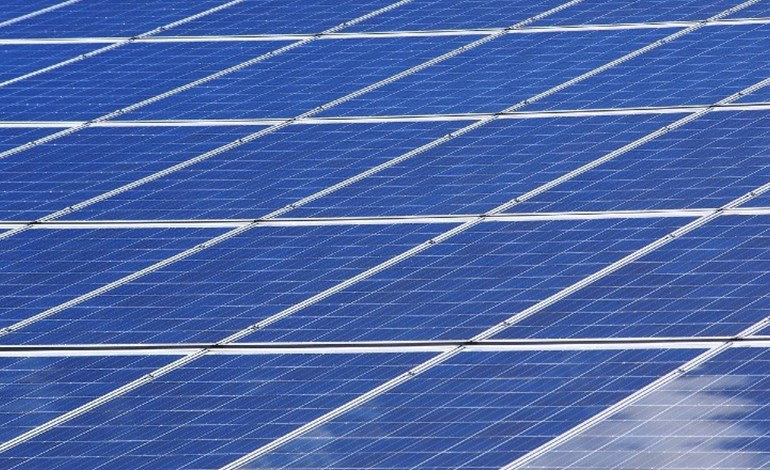
Hamburg-based wind and solar operator Encavis has concluded non-recourse project financing on two Danish solar farms. The projects are based in Svinningegarden in the north-western part of Zealand with a generation capacity of 34MWp and Rodby Fjord on Lolland in the south-western part of Zealand, which has a generation capacity of 71MWp. Encavis AG acquired the two parks from European Energy at the end of 2021. They produce electricity through long-term power purchase agreements (PPAs) with well-known technology companies. Rodby Fjord also benefits from a feed-in tariff (FiT) fixed for 20 years by the Danish Ministry of Energy, Supply and Climate. The financing of around €32m was provided by Rabobank, which is the first to conclude a joint transaction with Encavis AG in Denmark. The financing ends on the 30th of June 2040 and was structured and arranged internally by Encavis AG. The main component of the financing is a term facility that is fully secured over the entire term of the loan by means of interest rate swaps and cross currency swaps. “We are very pleased that we were able to achieve attractive conditions within the framework of this financing with Rabobank and that we now have additional financial resources available for further investments as part of our expansion goals,” said Dr Christoph Husmann, CFO of Encavis AG. Credits: renews.biz [Image: Pixabay]
Bluefield Wins 45MW Shropshire Solar Consent
The project near Ludlow was scaled back to avoid using agricultural land. Bluefield Renewable Developments has received planning approval for a 45MW solar farm near Ludlow in Shropshire. Development of the Brick House Farm project in Greete shall commence within three years, according to a Shropshire council planning committee. The approval was granted subject to the company redesigning the project to ensure it was not built on best and most versatile agricultural land (B&MV). After full technical and design review, Bluefield removed proposed solar modules from four parcels of BMV land totalling 15.4 acres, leaving 6.06 acres of Grade 3a land being required for solar due to remaining engineering and design constraints. The redesign means that 95% of the solar farm is now on grade 3b land, which is not BMV. Of the remaining BMV land, 15.4 acres are allocated as ‘Food Opportunity Areas’ with the remaining six acres allocated as Additional Biodiversity Enhancement Areas. The amendments resulted in a loss of 5MW of the solar farm’s capacity, down to the current 45MW. Credits: renews.biz/[Image: Pixabay]
Cubico JV launches Plans For Isle Of Man Solar Farm
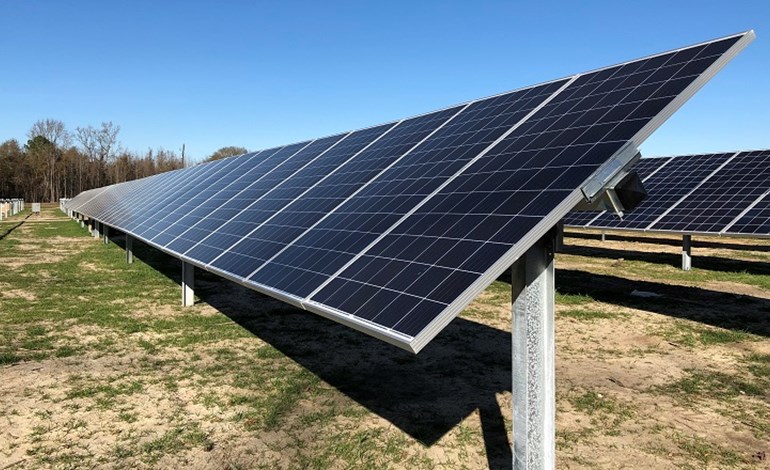
Proposals for the first utility-scale solar farm on the Isle of Man have been published by developer Peel Cubico Renewables (PCR). The 26MW Billown Solar Farm in Malew, near Castletown, would generate enough power to meet more than 5% of the Isle of Man’s electricity demand, when operational in 2024. Island residents are being asked for their views on the new facility which would be built on 84 acres of agricultural land to the west of Malew Road (A3) and south of Douglas Road (A7). An onsite substation is included in the plans which would connect to a nearby grid network. A battery storage facility would also store electricity generated during periods of low demand and re-distribute it to the grid when demand is high, or the network is down. The project represents an investment of around £30m across the 40-year anticipated life of the project. PCR is a joint venture formed a year ago between natural resources and energy business Peel NRE (part of Peel L&P) and Cubico Sustainable Investments. Stephen Snowdon, Planning & Development Manager at Peel Cubico Renewables, said: “Our vision for this solar farm supports both the Isle of Man’s response to climate change and the Government’s ambitions for renewable energy projects to help secure a bright economic future for the Island. “We also recognise the cost-of-living crisis facing Island consumers and believe that the Billown solar scheme will offer a fantastic opportunity for stable, low-cost green energy to be made available to all Island residents and businesses. “The development could be operational by 2024 and is a no-regrets hedge against future price volatility for the Island as well as a huge opportunity for the Island to take control over its long-term energy needs by exploiting its own abundant indigenous and renewable energy resources for benefit of Manx consumers.” Credits: renews.biz [Image: Cubico]
Octopus Energy Plans 1.1GW Italian Renewables Rollout
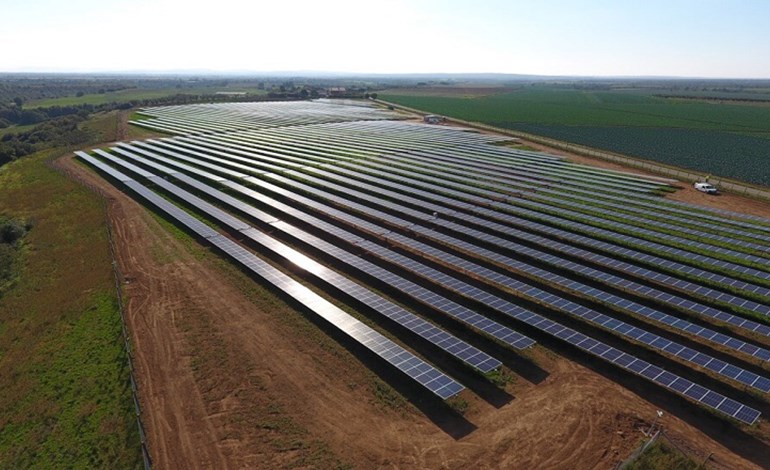
Octopus Energy Generation has re-entered the Italian market by creating a JV with renewables developer Nexta to create 1100MW of new onshore wind, solar farms and energy storage in the south of the country by 2025. The recently launched €220m Octopus Energy Development Partnership (OEDP) invests in early stages of building green power. OEDP is providing funding to Nexta who will secure land, grid connections, planning permission and local community engagement to get renewable projects to the ready-to-build stage. Nexta was founded in 2015, has achieved a leading position in developing renewable energy projects in Italy, and now has a 30-person team. Italy depends on Russia for around 25% of its imported gas and the Government has made clear its plans to reduce reliance further by building more renewables. In the past year, regulations have been passed to unblock bottlenecks in permitting renewable projects and speed up green energy deployment in Italy. Octopus Energy Generation chief executive Zoisa North-Bond said: “Building more new green energy will help reduce reliance on imported fossil fuels and drive down energy bills. “Onshore wind and solar are some of the cheapest forms of energy – and Italy can generate it right on their soil. “To avoid a repeat of the energy crisis, it’s essential we turbocharge the creation of new renewable energy and shift to a low carbon energy system.” Fabrizio Caputo, co-founder and managing director of Nexta added: “The partnership with Octopus represents a further step towards the consolidation of our growth objectives within the renewable energy industry. “We aim to play a leading role with Octopus in the energy transition process.” Giorgio Tomassetti, CEO of Octopus Energy Italy, said: “After launching the Octopus Energy brand in Italy this year, we’re really expanding in the country. Making energy cheaper and greener for people in Italy has always been the mission, and rising energy bills have added more urgency to this. Building more green energy will help us get out of this crisis.” Octopus Energy Generation previously invested in the Italian renewables market in 2017 to build 173MW of solar farms in Lazio and Sardinia, sold in February 2021. Re-entering Italy’s green energy generation market marks the latest step in Octopus’ strategy in Italy. It comes as Octopus continues to grow the team locally, including hiring a new dedicated country lead to help rapidly scale renewable projects in Italy. Octopus Energy Italy launched its energy supplier brand in Italy in June 2022 after acquiring SATO Luce e Gas in November 2021, and offers consumers 100% green energy tariffs. Credits: renews.biz[Image: Octopus ]
CATL Wins Battery Order For US Mega PV-Storage Site
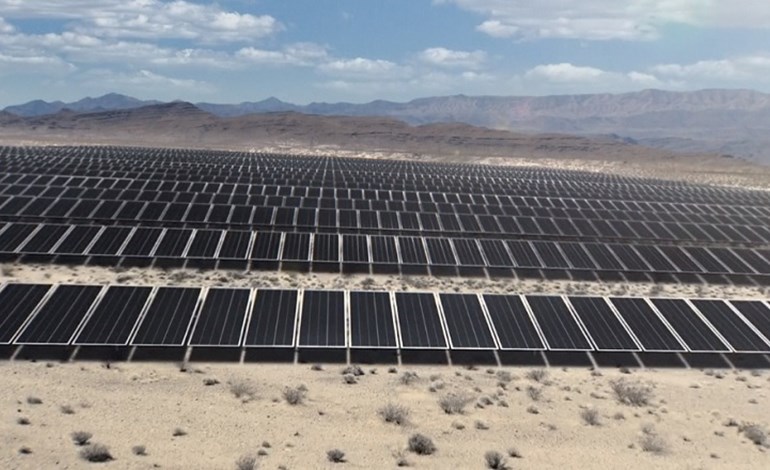
Primergy Solar has entered into a sole battery supply agreement with Contemporary Amperex Technology (CATL) for the Gemini solar-storage project near Las Vegas. Once completed, the $1.2bn Gemini facility will be one of the largest operational solar-storage projects in the US with a 690MW solar array and 1416 megawatt hours of storage capability. Earlier this year, Primergy completed a comprehensive and detailed procurement process and selected several globally leading equipment suppliers and construction partners for the Gemini project. Tan Libin, vice president of CATL, said: “We believe our cooperation on the Gemini Solar Project will set a great example for large-scale electrochemical energy storage applications, thus promoting global drive towards carbon neutrality.” Primergy designed a DC coupled system for the Gemini project, which will maximise efficiency from the teaming of the solar array with the CATL storage system. CATL will supply Primergy Solar with EnerOne, a modular outdoor liquid cooling battery energy storage system that features long service life, high integration, and high degree of safety. Ty Daul, Chief Executive Officer of Primergy, said: “The future of our country’s energy reliability and resiliency relies on the mass deployment of battery storage capacity that can supply consistent power back into the grid when it’s needed most. “Together with CATL, we are building a market leading and highly sophisticated battery storage system that can capture surplus solar power during the day and store it for use in the early evening after the sunsets in Nevada.” Credits: renews.biz[Image: Primergy Solar]
EnBW Cuts The Ribbon On German Solar Farm
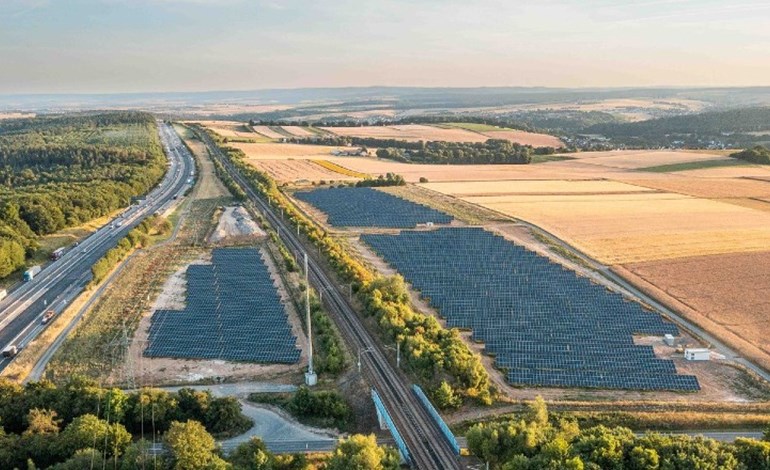
EnBW has inaugurated a new solar park, a roughly 4MW plant in the district of Limburg-Weilburg. With 8,970 solar modules divided across three solar fields, the facility can generate around 4.5m kWh of solar power, enough to cover the annual electricity needs of around 1,500 households. The plant is situated by the A3 motorway near Bad Camberg and marks EnBW’s first solar park in the state of Hesse. The plan for the solar project was approved by the Bad Camberg council roughly a year ago. Michael Class, Head of Generation Portfolio Development at EnBW, said: “In order to make Germany somewhat less dependent on imports of fossil fuel sources, we must at least triple the scale-up of renewables with immediate effect. “To do this, we still need simpler and faster approval processes that are not only implementable in practice, but also actually implemented.” Minister for the Environment Priska Hinz stated: “We have a clear goal: The state wants to achieve climate neutrality by 2045. The further expansion of solar energy is an important stepping stone toward achieving this goal. “Besides the role played by solar energy in mitigating climate change, the war in Ukraine makes it very clear that we must end our reliance on fossil fuel sources even more quickly. Between 10,000 and 15,000 hectares of land for large-scale PV power plants are required across the entire state in order to bring about the urgently needed energy transition. Local authorities must make suitable space available for this purpose as part of the land-use planning process.” Credits: renews.biz[Image: EnBW]
Fresh Investment To Help Develop Danish E-Methanol Facility
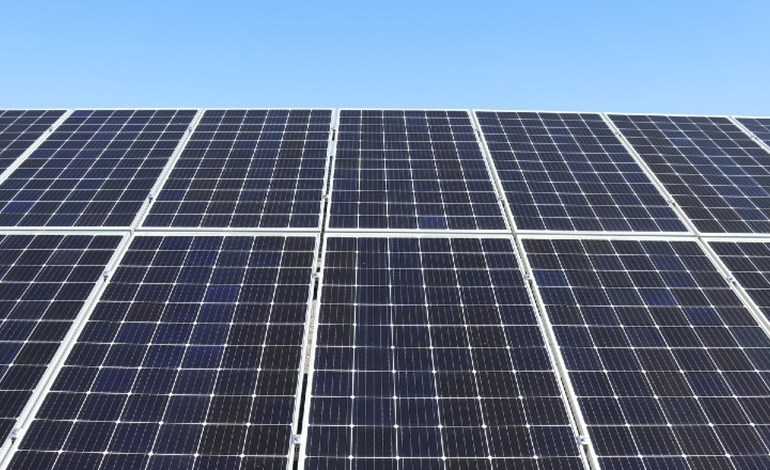
A €53m investment from the Danish Green Investment Fund will help move European Energy’s Danish e-methanol facility a step closer. The company’s upcoming Power-to-X-facility (PtX-facility) in Kasso will be the largest e-methanol facility in the world to date. The future PtX facility is supplied with renewable energy from the nearby Kasso Solar Park, which European Energy has developed and built. The solar park is to date the largest solar park in Northern Europe with a capacity of 300MW. This corresponds to the solar park being able to supply 75,000 Danish households with green electricity. The financing from the Danish Green Investment Fund’s financing is part of the total investment in the facility, which the Danish bank Jyske Bank is also co-financing. “We see great potential in the facility, which is a step towards scaling PtX technologies. The entire value chain is conceived by, among other things, using CO2 when the e-methanol is to be refined – and this can help to meet the massive demand for electrofuels,” said Michael Zollner, Managing Partner at Denmark’s Green Investment Fund. “We are very happy that DGIF sees the same potential in green fuels, including e-methanol, as we do,” said CEO of European Energy Knud Erik Andersen. Credits: renews.biz[Image: Pixabay]
IBC Solar Offloads 120MW Polish PV Pair
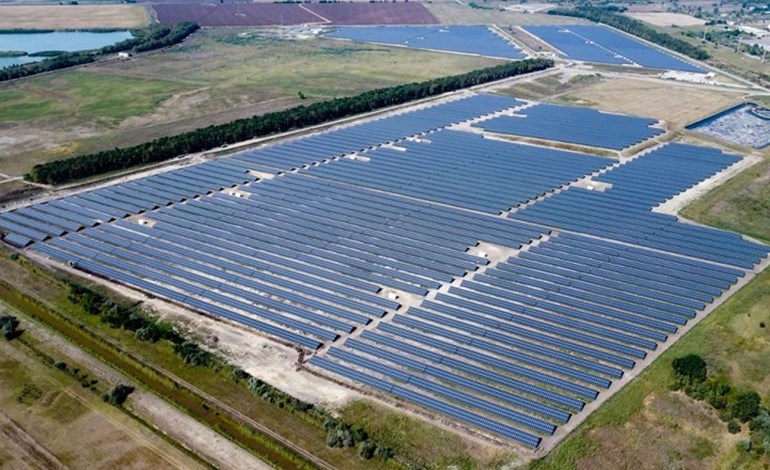
IBC Solar has sold two solar projects totalling 120MW in Poland to Israel-based Afcon Renewable Energy. The projects are in advanced development in the western region of Poland. Afcon Renewable Energy will complete the development of the projects up to the stage of readiness to build (RTB) through development agreements signed with local entrepreneurs. “The signing of the contract is the kick-off of our joint project activities with Afcon, which may be extended to other countries as well,” said Patrik Danz, Chief Sales Officer of IBC Solar. “The sale to Afcon is only a part of our project development in Poland, which comprises more than 600 MW and is being continuously expanded.” “As a full-service provider IBC Solar is an experienced partner for renewable energy projects from the development and turn-key realisation, up to the operation and maintenance,” added Wojciech Prokopowicz, Managing Director IBC Solar Polska. Israel Raif, Chairman of Afcon, added: “We are very pleased about our cooperation with IBC Solar. “These two projects are a significant addition to our portfolio of projects in general and in Poland in particular. “Afcon is continuing to invest in unique large-scale solar projects and this acquisition will position us as a significant player in the renewable energy market in Europe.” Credits: renews.biz[Image: IBC Solar]
GRIDSERVE Completes The ‘UK’s Most Technically Advanced Hybrid Solar And Battery Farm’
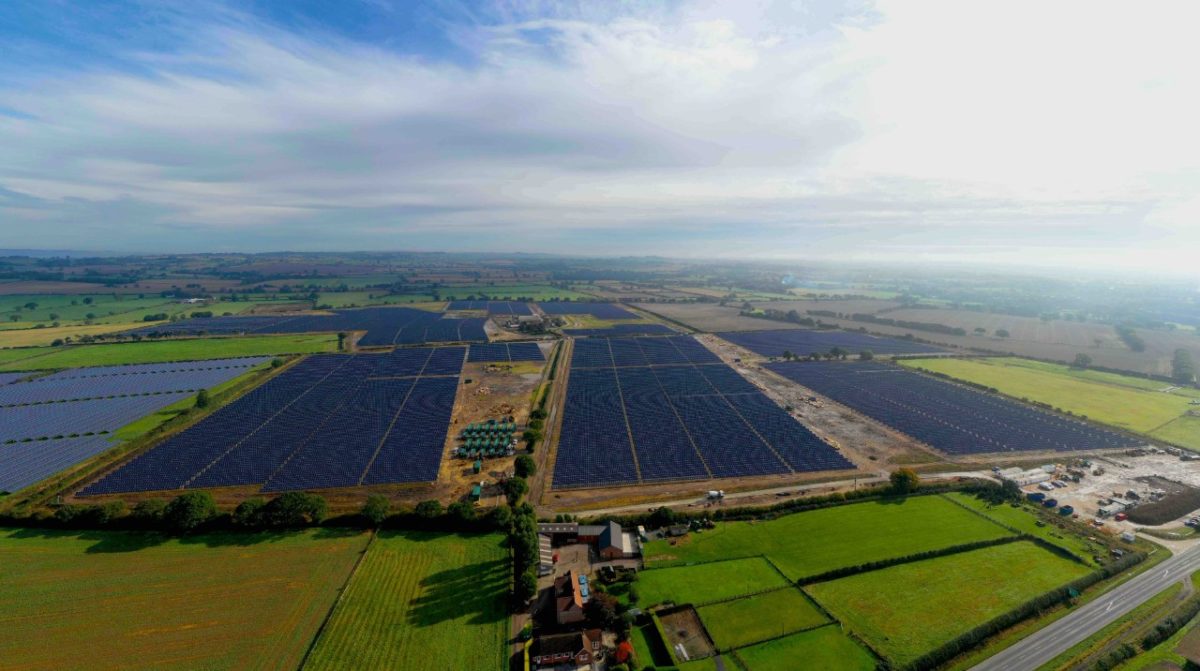
GRIDSERVE has completed the development of the “UK’s most technically advanced hybrid solar and battery farm” in Cirencester, the company said. The 23MWp DC coupled solar and battery farm includes more than 43,000 bifacial solar panels, plus 51MWh of energy storage. It is the third such farm to be handed over to Warrington Borough Council making it the “first local authority in the UK to produce all of its own electricity”, it claimed. By using bifacial panels coupled with sun trackers for the renewable energy generation, the farm will have an increased efficiency by around 20% compared to traditional technologies. “It is our collective responsibility to tackle the climate change emergency. Projects like Cirencester Hybrid Solar Farm require no government subsidy and deliver secure, affordable and plentiful energy,” said Toddington Harper, CEO of GRIDSERVE. “They demonstrate that the UK can meet its net zero obligations, and in partnership with Warrington Borough Council, enable us to deliver radical carbon reductions to move the needle on climate change in the fastest possible timeframes, and at the lowest cost.” The first of these “game changing” hybrid solar-plus-storage projects had been developed in York, 2019, which at the time became the first utility-scale solar farm in the UK to use both trackers and bifacial solar panels. The 34.7MWp solar farm had been co-located with a 27MW battery, enabling what the renewable developer labelled as a “pioneering” new commercial model for solar in the UK. At the time, Harper said: “We’ve completely rethought the solar model to maximise value, and we’ve now demonstrated that we have what it takes to make projects like this a reality. To replicate this success, we are now looking to partner with additional landowners, developers, and to acquire project rights.” More than 90,000 bifacial panels supplied by Suntech make up the energy generation element of the site, with single-axis trackers supplied by Nextracker used to shift the generation portfolio of the solar farm. Sungrow inverters and Samsung batteries complete the array’s technology suite. This project had also been handed to Warrington Council upon its completion. “The completion of Cirencester Hybrid Solar Farm is great news for Warrington. It will provide a huge boost to our ongoing work to tackle the climate emergency, reduce greenhouse emissions, and tackle fuel poverty in our borough. It will also provide enough net zero carbon energy to charge our fleet of all-electric buses when they are rolled-out next year,” said Cllr Janet Henshaw, cabinet member for sustainability and climate change at Warrington Borough Council. “Investing in subsidy-free developments has been a landmark achievement for the Council. Each project has proven to be a solid strategic decision to ensure the borough’s future energy security. We look forward to working with GRIDSERVE to ensure Cirencester Hybrid Solar Farm continues to generate optimal financial and environmental returns.” GRIDSERVE entered into a partnership with Hitachi Capital (UK) In April 2020 which saw the latter make a multi-million-pound investment through a loan facility. Hitachi’s loan facility will help fund projects including two hybrid solar farms in Gloucestershire and Lincolnshire. Credits: solarpowerportal.co.uk