
New research reveals total investment in European solar energy startups is up 398% compared to this time last year. Solar startups in Europe received $6bn in backing in the first five months of 2023, compared with $1.2bn raised by the same point in 2022. Avnet Abacus, an electronics distributor, has produced the findings after analysing Crunchbase data for companies listed in the solar energy category to provide insight on the level of funding going into the sector. The average funding round for European solar startups in 2023 is at a record high of $166m. In other key findings by Avnet Abacus, globally investment in the solar sector is up 47%, with funding down 7% in the US so far this year. Despite the continued uncertainty in the venture capital market, average investment in European solar is at an all-time high at $166m, compared with an average of $88.3m in 2022 and $22.9m in 2021. The figure flowing into European solar so far this year eclipses the sector’s global average of $116.8m and the US average of $113.8m, stated Avnet Abacus. Sara Ghaemi, Avnet Abacus’s Technical Director, said: “Even though solar technology is relatively mature, there is still a lot of room for growth and innovation. “There is growing demand around the world, and government policies and incentives continue to support investment in this area, with engineers continually seeking new ways to make solar more efficient. “Rooftop solar panels could potentially produce 25% of Europe’s annual electricity consumption. As well as the available rooftop surfaces, the facade of the buildings can also contribute to the generation of green energy. “When looking for a replacement to fossil fuels, however, rooftop and facade panels will not be enough. “This will require large scale photovoltaic farms, where you’re talking about megawatts of power generation. “At such high power and high energy density, recent developments in silicon carbide and gallium nitride technologies are enabling power to be converted with greater efficiency than traditional silicon-based components.” Credits: renews.biz [Image: Dulas]
3SUN Expands Module Range
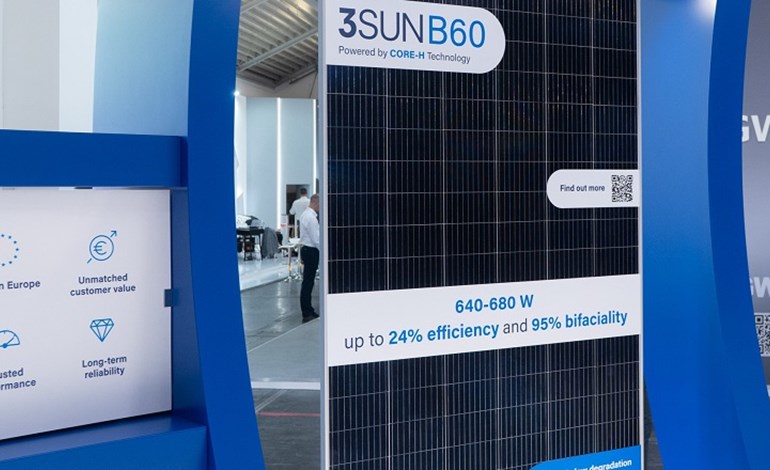
3SUN, Enel Green Power’s module manufacturing business, has launched three new solar modules, which will be available in 2024. The products based on 3SUN’s hetero-junction technology (HJT) entirely developed by 3SUN and which will be made in Italy. The modules can be used in utility-scale ground-mounted projects as well as on rooftop installations. “A new milestone in the history of 3SUN materialises with the presentation to the solar industry of new photovoltaic modules that will be produced in our Gigafactory in Catania”, said Eliano Russo, CEO of 3SUN. He added: “Excellence, innovation and sustainability are our cornerstones for build latest generation photovoltaic panels, able to compete with the big players in the market. “From today, the photovoltaic industry can count on a new protagonist, to contribute to achieve the decarbonisation goals and build a more independent and secure Europe from the point of energy view.” Credits: renews.biz [Image: 3SUN]
Voltalia Powers Up UK Solar Park
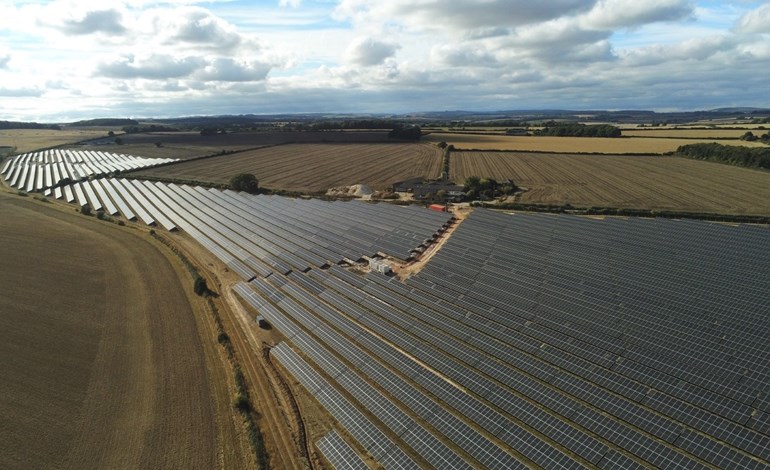
Voltalia has officially inaugurated its largest solar park to date in the UK, which it has developed via a Corporate Power Purchase Agreement (CPPA) with local authority the City of London Corporation. South Farm Solar Park has a total capacity of 49.9MW, the equivalent of more than half of the governing body’s electricity needs. The project has been supported by Santander UK, which provided £25m funding to support its construction and operation. Voltalia head of power sales Laurent Pillot said: “Signing a CPPA with the City of London Corporation has been an important milestone for Voltalia in the UK. “The transition to green electricity is gathering pace globally, and the City Corporation is a leader: it has demonstrated the capacity of a public entity to take efficient and meaningful decisions to accelerate this trend. “We are very proud to effectively deliver green energy to the City of London Corporation since the beginning of 2023 and we hope to continue to support City of London in their energy transition path.” Deputy policy chairman and policy lead for sustainability at the City of London Corporation, Keith Bottomley, added: “This scheme is a pioneering blueprint by the City Corporation for local authorities across the UK, cutting carbon emissions and giving cheaper, more secure energy, protected from the price volatility of energy markets. “The deal will increase our green energy supply, has no reliance on taxpayer funding, and helps us transition quickly away from fossil fuels.” Credits: renews.biz [Image: Voltalia]
Renewable Connections Secures Fife Battery Permit
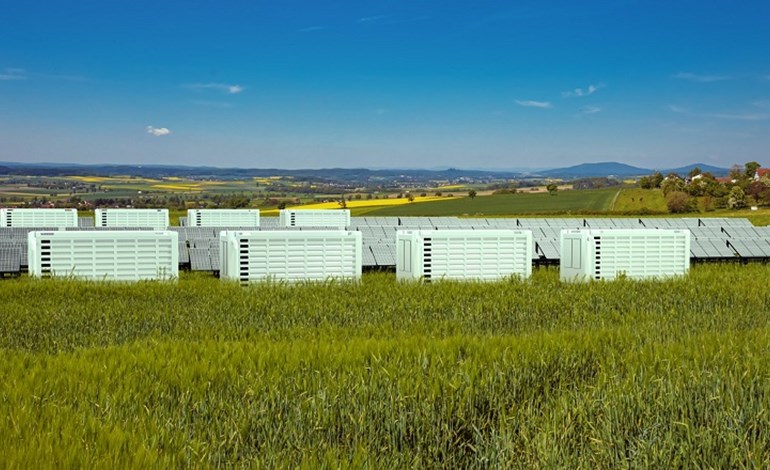
Renewable Connections, a UK solar and storage developer, has won planning approval for its Balbougie Battery Energy Storage System (BESS) in Fife, Scotland. The BESS project and its associated cable route and infrastructure were approved by Fife Council’s Planning Committee on 7 June. The development has a maximum import capacity of 42MW and will be built on land at South Pargillis, Clockluine Road, Hillend, Dunfermline. It will connect into the Inverkeithing Grid Supply Point and construction of the site is anticipated to commence in 2024 The Council’s planning officer recommended the scheme for approval and was unanimously backed by committee members. Development director at Renewable Connections John Leith said: “Fife Council is leading by example on the path to net zero. As well as declaring a Climate Emergency in 2019 the council has been proactive in launching its own Climate Fife Action plan to support the area’s climate-friendly and carbon neutral ambitions.” He added: “Projects like Balbougie BESS are integral to helping achieve these aims. Battery storage has a key role to play in ensuring homes and businesses can be powered by renewable energy sources, even when the sun isn’t shining or when the wind isn’t blowing. “The system will help balance supply and demand across the National Grid, with the ability to store and release power for tens of thousands of homes, as well as displacing a significant amount of CO2 from fossil fuel sources per year of operation.” Credits: renews.biz [Image: Adobestock]
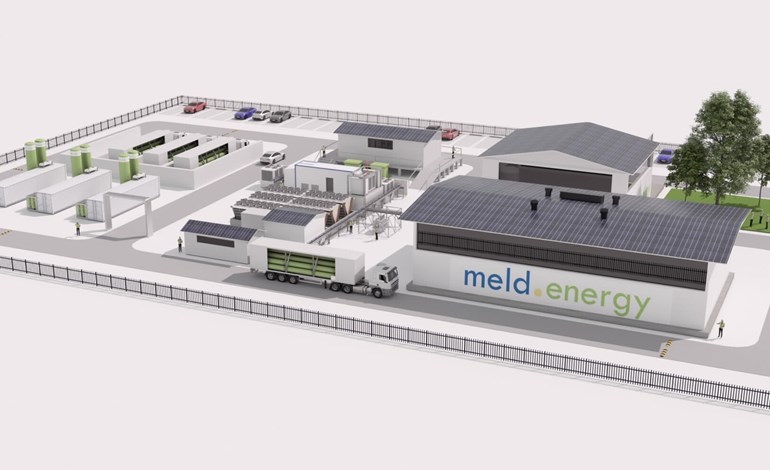
Green Hydrogen Player Chooses UK Site
PX Group’s Saltend Chemicals Park in Hull, UK has been selected as the site for the build of a green hydrogen facility being developed by Meld Energy. The move represents an investment of between £180m and £240m by the green hydrogen industrial developer. Meld Energy is an international hydrogen development company and is working with the global energy management company, World Fuel Services Corporation, to develop green hydrogen supply chains. World Kinect Sustainability Ventures, a subsidiary of the publicly listed US Fortune 500 company, acquired a 50% stake in Meld in late 2022. Meld is currently bidding for development support from the UK’s Net Zero Hydrogen Fund. Should the bid win government backing, FEED (Front End Engineering Design) is expected to begin in November 2023 and would run concurrently with planning application processes. Building would commence less than a year later with a target operation in early 2027. The facility would have an initial installed capacity of 100MW and the potential to increase its capacity to over 200MW in a second development stage. Meld would utilise PPAs (Power Purchase Agreements) with renewable energy suppliers. The hydrogen produced by Meld would be used to provide energy on-site at Saltend, helping to switch over from more carbon-intensive fuels and chemical feedstock to emissions-free green hydrogen. The Humber is the UK’s most carbon-intensive region. Credits: renews.biz [Image: Meld Energy]
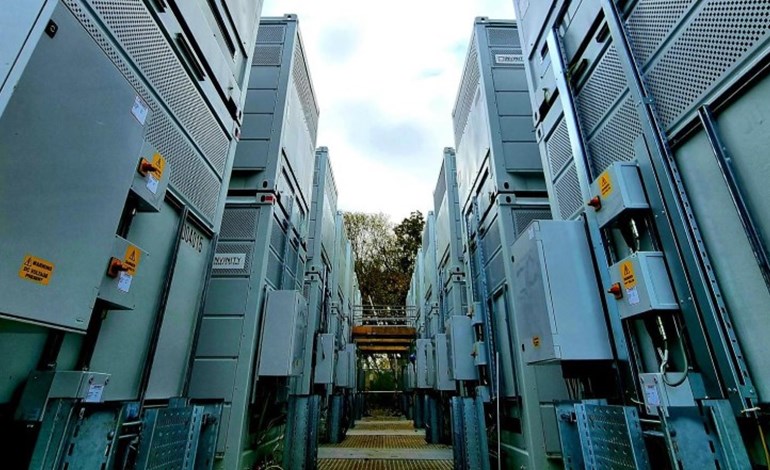
Invinity To Launch Flow Battery Prototype
Storage developer Invinity Energy Systems is to deploy the first prototype of its next-generation flow battery at a site in British Columbia, Canada, early next year. The project has been funded in part by a CAN$0.5m award from the BC Centre for Innovation & Clean Energy (CICE). The backing will support the manufacture and deployment of a 1.2MWh prototype of Invinity’s next-generation vanadium flow battery (VFB), code-named Mistral, at a site near Invinity’s engineering and operations centre in Vancouver, British Columbia. Expected to be operational in H1 2024, this will be the first Mistral product deployed as a pilot in the field, the company said. The prototype will be tested against a commercial use case with the intention of demonstrating performance of the newly-developed product as a customer facing, fully-integrated energy storage system. Further details of this project are expected to be announced before the end of this year. Credits: renews.biz [Image: Invinity] [Image: Invinity]

‘Extend UK O&G Windfall Tax Changes To Renewables’
The REA (Association for Renewable Energy and Clean Technology) and Energy UK have called on the UK Government to extend planned windfall tax changes for oil and gas to renewable energy as well. The Government will introduce a new Energy Security Investment Mechanism which will reduce the windfall tax rate on Oil and Gas producers, called the Energy Profits Levy, when energy prices return to consistent normal levels. The intention is to ensure that investments in domestic energy supply are safeguarded. The REA argues that being serious about protecting energy security and British jobs requires applying these benefits to the cheapest forms of domestic electricity generation, which also happen to be critical to delivering a decarbonised electricity system. As such, the Energy Security Investment Mechanism must also be extended to reduce the tax rate being placed on the low carbon generators under the equivalent Electricity Generator Levy. The renewables and clean tech sector is key to tackling the volatile costs of fossil fuels at the heart of rising energy bills, and its treatment must be fair and equitable in relation to the oil and gas sector, the REA said. Mark Sommerfeld, head of power and flexibility at the REA, said: “Once again, the Government are focusing tax cuts on fossil fuel producers, while the equivalent windfall tax on renewables, called the Electricity Generator Levy (EGL), remains unchanged. “Today’s announcement for the Energy Security Investment Mechanism will reduce the tax liability on oil and gas producers when energy prices return to consistently normal levels, however, will not apply to renewable generators, despite a harsher tax on low carbon generation. “Furthermore, the Government have repeatedly ignored calls to introduce a dedicated Investment Allowance for renewables, which would promote low carbon investment, despite the equivalent allowance again already being in place for oil and gas. “Government is presenting today’s announcement as necessary for delivering energy security, yet it is not applying these benefits to the cheapest forms of domestic electricity generation, which also happen to be critical to delivering a decarbonised electricity system. “If Government is at all serious about energy security, The Energy Security Investment Mechanism must be extended to renewables and the EGL be urgently reformed.” Energy UK agreed that renewables should also be covered by the mechanism. It added that it should also mirror the EU and remove the windfall tax on renewable energy. Emma Pinchbeck, Energy UK chief executive, said: “Whilst wholesale prices have fallen, many customers, including businesses, are still struggling with high energy costs, and the long-term solution out of the energy crisis is to move away from a reliance on fossil fuels and produce cheap, low carbon energy here in the UK alongside making our buildings far more efficient. “Alongside easing the Energy Profits Levy, the Government has kept a windfall tax on renewable energy, disincentivising the very technologies that will help insulate the UK from future energy price crises. “The EU is looking to remove its windfall tax on renewable energy and the US has put billions of dollars behind a huge stimulus package. “We’re in a global race for investment and the UK is at risk of losing out on the vital infrastructure needed to keep our energy supply secure. “We have an opportunity to build on our existing capabilities and lead the world in green technologies like Small Modular Reactors, Carbon Capture and Storage, hydrogen and floating offshore wind. “We urge the Government to revisit the Electricity Generator Levy, with this global context in mind.” Credits: renews.biz [Image: Unplash]

Canadian Solar Subsidiary Lists In China
Canadian Solar’s majority-owned subsidiary CSI Solar Co has completed its initial public offering (IPO) process and its shares have started trading on the Shanghai Stock Exchange’s Sci-Tech Innovation Board under the stock code 688472. In the flotation, CSI Solar issued 541,058,824 shares, representing 15% of 3,607,058,824 shares outstanding immediately after the IPO. In addition, CSI Solar has granted the principal underwriter of the IPO a 30-day option to purchase up to an additional 81,158,500 shares of CSI Solar to cover over-allotments, if any. The total shares issued by CSI Solar will be 622,217,324, representing approximately 17% of 3,688,217,324 shares outstanding after the IPO, assuming that the over-allotment option is exercised in full. The shares were issued at a public offering price of RMB11.10 per share and the total gross proceeds of the IPO are approximately RMB6bnn (approximately US$850m). Immediately after the IPO, Canadian Solar owns approximately 64% of CSI Solar, assuming the over-allotment option is not exercised, or approximately 62% of CSI Solar, assuming that the over-allotment option is exercised in full. The shares of CSI Solar will not be and have not been registered under the Securities Act of 1933 and may not be offered or sold in the United States absent registration or an applicable exemption from registration requirements, Canadian Solar said. Credits: renews.biz [Image: Canadian Solar]

EU Looks To End Windfall Levy On Renewables
The European Commission has recommended ending a revenue cap on renewable energy producers, many of which have claimed has acted as a barrier to new wind and solar investments. In a report on the review of emergency interventions to address high energy prices submitted to the Council on 5 June, the European Commission found that the temporary, emergency measures introduced for the energy market at the end of last year – electricity demand reduction measures, infra-marginal revenue cap, and retail price setting rules – contributed to a calming of the European energy markets. The report also concludes that as the EU electricity market supply and prices have now changed considerably from the record high levels last year, a prolongation of these emergency measures does not seem necessary or advisable at the current time. The Commission confirmed that it will not propose a prolongation of these crisis measures. At the same time, the report recalls that certain aspects of these rules have been included among the longer-term structural adjustments in the electricity market design proposals tabled by the Commission in March. The report notes that electricity prices have now decreased to less than €80/MWh and gas prices have not only fallen but also stabilised, to the extent that the electricity price spikes observed throughout 2022 are considered “less probable to occur in the upcoming winter”. With respect to the electricity demand reduction measures, each EU country implemented measures to reduce electricity demand, such as through awareness-raising campaigns and targeted energy-saving measures. The implementation of the inframarginal revenue cap varied greatly across EU countries – both in terms of the level of the cap and the time scope. The report notes that the increased stability in gas and electricity markets means prices have steadily fallen below the revenue cap level. The report also highlights that 12 out of 25 EU countries took advantage of the possibility to widen the scope of retail price regulation in times of crisis to SMEs and apply price regulation below costs under certain conditions. Credits: renews.biz [Image: Sebastian Bertrand]

Orsted Commits To Recycling Solar Panels
Orsted has pledged to reuse or recycle all photovoltaic modules from its global portfolio of solar farms with immediate effect. To assist this commitment Orsted has formed a partnership with Solarcycle, a technology-based PV recycling company, to process and recycle Orsted’s end-of-life solar panels from its projects across the US, which is one of the main solar markets for the developer. Solar energy is a key technology for the green energy transition and for limiting global warming. However, the deployment of this technology requires vast amounts of virgin materials. The mining of these has environmental and social impacts, and competition to secure access to these materials is on the rise. To lower dependency on virgin materials, a key solution is to reuse or recycle end-of-life solar panels and bring the materials back into manufacturing. Today, reusing and recycling solar panels is limited, and landfilling is still common practice. This means that materials with a high value to the green energy transition are simply let go to waste. Ingrid Reumert, Senior Vice President, and Head of Global Stakeholder Relations at Orsted, said: “With this global solar commitment, Orsted is leveraging its position as a leader in sustainability and renewable energy to incentivise the creation of a market for – the recycling of solar panels – and with the Solarcycle partnership, we’re taking the first tangible steps to ensure that critical materials needed for green energy will be reused or recycled.” Solarcycle’s recycling facility in Texas extracts the valuable materials from panels, including metals like silver, copper, and aluminium, and materials such as glass and silicon. The company can take these materials and refine them to make the next generation of newer, higher-efficiency solar panels. Orsted has been growing its onshore portfolio in the past few years with the ambition of reaching 17.5GW of wind and solar PV capacity for its global onshore portfolio by 2030. Credits: renews.biz [Image: Orsted]