
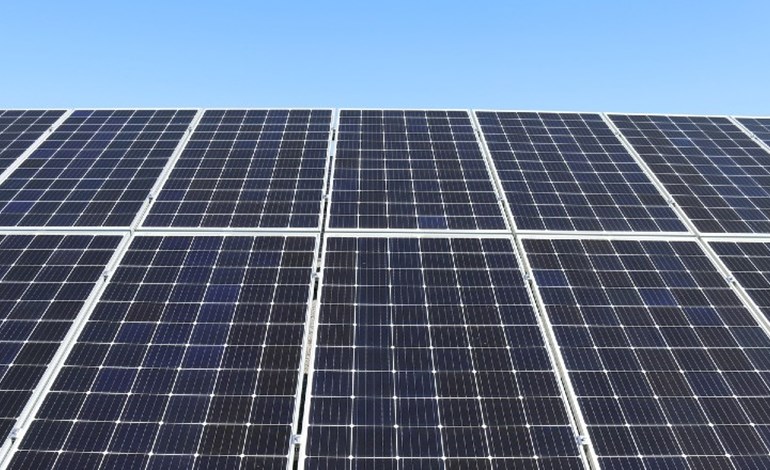
Mytilineos Energy & Metals has made a 1.4GW portfolio purchase of five solar projects from Westbridge Renewable Energy Corp. The projects, currently under development in Alberta, Canada, include the 230MW Georgetown solar farm, the 280MW Sunnynook project, the 200MW Dolcy, 300MW Eastervale, and 225MW Red Willow project. Renewables Consulting Group (RCG) has acted as sole technical advisor, providing a full technical due diligence of the portfolio, a thorough review of engineering and preliminary design, interconnection and transmission system review, independent energy yield analysis, permitting, development, transaction/commercial market intelligence and stakeholder review. Mytilineos’ Regional Managing Director for North America Luis Laguna said: “We first set foot in Alberta five months ago and now we are celebrating this great accomplishment. Thanks to RCG for their guidance and advice in navigating our entry into the Canadian market.” RCG Principal Bert Chen added: “RCG is proud to introduce Mytilineos to the Alberta and Canadian market and assist in providing thorough due diligence of the portfolio. We believe that Mytilineos’ global expertise will bring the necessary expertise and resources to develop these projects as a new entrant in the Alberta market.” Credits: renews.biz [Image: Pixabay]

Banks Renewables Seeks To Add Battery To Leeds Solar Farm
Banks Renewables has submitted a proposal to add battery storage capacity to the Barnsdale Solar Energy Park to Leeds City Council for review. The developer previously secured planning approval for the project in 2021 and is now seeking permission to add a containerised battery energy storage system with the capacity to hold up to 40MW of the electricity generated at the site, which is enough to power around 48,000 homes for two hours during peak times. The original Barnsdale scheme was supported by both Allerton Bywater and Kippax Parish Councils, and after being recommended for approval by the City Council’s expert planning officers, won unanimous support from the members of its planning committee. Jamilah Hassan, community relations manager at the Banks Group, said: “We’ve been continuing with the technical work required to progress the Barnsdale solar energy park and the submission of this planning application marks the latest landmark on the journey towards the realisation of our plans. “Adding battery storage to this site will ensure the energy supply can be managed with maximum efficiency and will also reduce energy wastage, which will in turn assist in reducing the cost of energy for consumers. “The benefits of co-locating battery storage capacity alongside solar energy generation facilities in this way are proven and accepted, and having had a great deal of local support for the Barnsdale project, we hope Leeds City Council’s planning committee will be similarly supportive of this application.” Credits: renews.biz [Image: Banks Renewables]

Trina Solar Wins Uzbek Solar Tracker Deal
Trina Solar’s tracker business has signed an agreement to provide 510MW of solar trackers for projects in Uzbekistan. The contract with Dongfang Electric International Corporation (DEC International) will see TrinaTracker supply Vanguard 1P units to the Jizzakh and Samarkand solar power plants in Uzbekistan. Once connected to the grid, the two sites will generate 1.1 terawatt-hours (TWh) of renewable electricity annually. This is the second project TrinaTracker has secured as the exclusive supplier for solar plants in Uzbekistan, supporting the country’s solar power development target of 4GW by 2026 and 5GW by 2030. It has provided 2618 sets of solar trackers for the 100MW Nur Navoi Solar Project, the country’s first solar power plant, which was inaugurated in August 2021. The country aims to develop high-quality power plants in a bid to maximise the benefits of solar energy. Credits: renews.biz [Image: Trina]

UK Solar Taskforce Raises The Roof
Schools, warehouses and car parks could be at the forefront of a revolution in affordable solar power, under plans discussed at the first meeting of the UK government’s new Solar Taskforce. London has a clear target to increase solar capacity by nearly five-fold to 70GW by 2035 as part of wider plans to power Britain with cleaner, cheaper and more secure energy sources. Even when this is met, the UK would be using only a very small proportion of its land mass for solar panels. Already over a million UK homes have solar panels fitted to their roofs, providing reliable energy while significantly reducing consumer bills and creating thousands of jobs. However, the taskforce, led by Energy Minister Graham Stuart (above left) and Solar Energy UK chief executive Chris Hewett (above right) highlighted the untapped potential of commercial buildings, schools, warehouses and car parks. “Households across the UK are already doing their bit to provide cleaner, cheaper and more secure energy sources with the solar panels on their roofs – but with acres of rooftop space on car parks and supermarkets in every community, we can be doing even more,” said Stuart. “This new dedicated Solar Taskforce will have a laser-like focus on cutting the costs and breaking down the barriers to harnessing the power of the sun in every way we can, all while using a small fraction of this country’s land,” he added. “Doing so will make a significant contribution to boosting our energy security, cutting people’s bills and providing long-term jobs.” Hewett added: “Installing rooftop solar power, whether at residential or commercial scale, is one of the best investments available, offering dramatic savings on energy bills and the opportunity to be paid for sending excess power to the grid. The benefits can also be greatly enhanced by adding a battery storage system. “Solar is the most popular form of power generation amongst the British public and consumer demand has never been higher, though the rate of rooftop installation must double to help hit 70GW by 2035. The number of solar farms will also have to increase significantly. I am delighted we now have industry leaders working directly with the government to resolve the stumbling blocks and maximise the benefits that solar energy offers to the nation.” Part of the discussion at the first meeting of the taskforce was how to drive more rooftop installation, such as enabling cost reductions for households and businesses looking to install solar panels, so that even more can reap the benefits of solar power such as reducing their bills. The body also discussed plans to publish a solar roadmap in 2024 to drive forward the actions needed to deliver the UK’s 2035 target; upskill and expand the solar workforce; and identify opportunities to secure resilient supply chains within the global market. Credits: renews.biz [Image: Solar Energy UK]

Statkraft Sets Out 2GW Germany Wind, Solar Plans
Statkraft plans to create 2000MW of wind and solar in Germany in 2030 and become one of the leading green hydrogen suppliers in the country. Against the backdrop of the ongoing energy crisis in Europe and advancing climate change, Statkraft said it is strategically well positioned to play a key role in shaping the necessary transformation of the German energy system. Statkraft country manager in Germany Stefan-Jörg Göbel said: “Germany is facing the major challenge of massively accelerating the expansion of renewable energy – in order to achieve the climate targets and create a faster phase-out of fossil fuels. We can confront this challenge with very concrete solutions. “We are building an organisation that will be able to develop and build around 300 to 500MW of wind and solar capacity in Germany every year from 2027.” This would be on top of its existing 1800MW flexible power plant portfolio. Göbel said:”We are one of the most important companies for the energy transition with a unique combination of strength and flexibility. “Our strong financial position is crucial on the way to becoming one of the global leaders in renewable energy. “Statkraft’s ambition is to build 2500 to 3000MW per year, equivalent to one new power plant every ninth day from 2025.” The company announced its market entry as a developer in Germany in 2019. In addition, Statkraft aims to become a leading supplier of green hydrogen in selected Statkraft markets in Europe. In Germany, the company plans to have at least 250MW of installed electrolysis capacity operational in 2030. As recently as April, Statkraft announced plans for a 10MW pilot project at the existing power plant site in Emden, which is expected to be operational in 2025, provided the necessary permits and funding are in place. The aim is to operate electrolysers in Emden to produce green hydrogen with a total capacity of up to 200MW connected to the future hydrogen pipeline network by 2030. Other German power plant sites are currently being examined for their potential to produce green hydrogen, Statkraft said. Credits: renews.biz [Image: Statkraft]
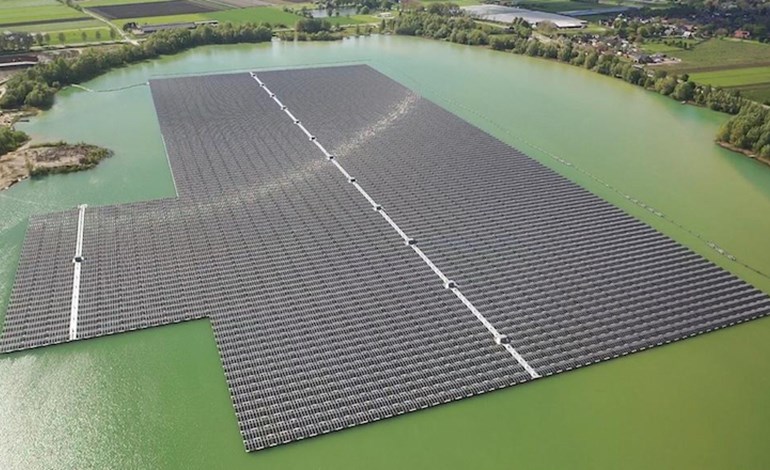
Global Floating Solar ‘To Pass 6GW By 2031’
The global floating solar market is expected to pass the 6GW threshold by 2031, as PV developers struggle to meet growing solar demand and look to alternate development technologies, according to analysis from Wood Mackenzie. Floating solar is expected to have a steady market share compared to overall global solar demand, with the compounded annual growth rate (CAGR) for floating solar (FPV) expected to rise 15% in the next ten years. Wood MacKenzie forecasts that 15 countries will exceed 500MW of cumulative FPV installations by 2031, with Indonesia, India and China making up almost 70% of the total FPV demand in 2022. The Asia-Pacific market had approximately 3GW of floating solar projects in 2022, capturing over 90% of floating solar demand that year, according to the analysis. Countries such as China, Indonesia, India, South Korea, and Thailand are developing multiple floating solar projects, it found. In China, the floating solar project pipeline will grow at a steady pace going forward, with cumulative floating solar capacity to cross 13GW by 2031 at a 12% CAGR over the next 10 years, according to the research. With almost 150MW, Europe is the second largest region for FPV demand, with the Netherlands in the lead followed by France. The Netherlands has the largest FPV project outside the Asia-Pacific region, representing 32% of Europe’s FPV market in 2022, helped by the Sellingen floating solar park (41.4MW) that came online in 2021. This reflects how project sizes are continually growing in Europe’s leading market, Wood Mackenzie said. Ting You, consultant at Wood Mackenzie said: “The global solar industry, including PV developers, continue to battle limited land availability and increasing land costs for ground-mount solar projects, which is driving demand for floating installations.” Credits: renews.biz [Image: BayWa r.e]
Lightsource BP Commissions Indiana Project
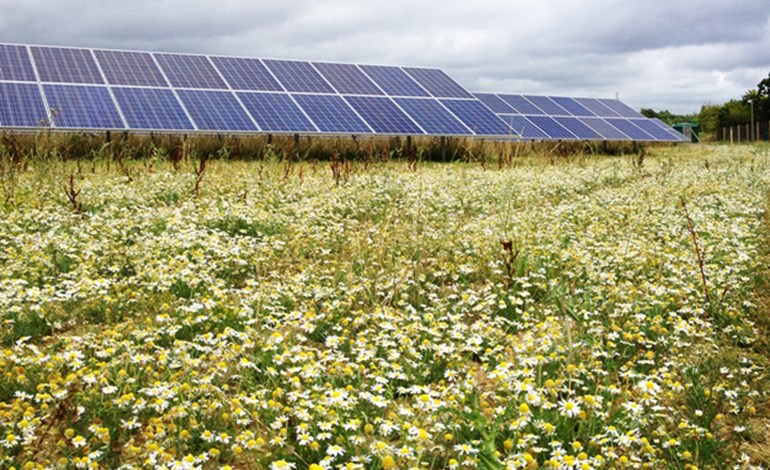
Lightsource BP has announced commercial operation of its Bellflower Solar project, located about 40 miles east of Indianapolis in Henry and Rush Counties. Lightsource BP developed, financed and will own and operate the 152.5MWac project, and has entered into a virtual PPA with Verizon to offtake the energy generated. The solar farm is expected to offset the equivalent of 202,000 metric tonnes of carbon dioxide emissions each year, improving air quality while furthering Verizon’s goal of being carbon neutral in its operations (scope 1 and 2) by 2035. James Gowen, senior vice president of global supply chain and sourcing, and chief sustainability officer at Verizon, said: “Verizon is committed to protecting our planet by supporting the production of renewable energy and the transition to a greener US energy grid. “The renewable energy produced by the Bellflower Solar project will help us achieve net zero operational emissions by 2035.” The Bellflower solar farm brings many environmental benefits to Indiana, in addition to improving air quality by reducing carbon dioxide emissions from electricity generation. Lightsource BP planted 800 acres of land under and around the solar panels with vegetation that includes native species beneficial to pollinators and other wildlife, which will be conserved for decades. An additional 10 acres has been dedicated to lush pollinator gardens with more than 60 different types of flowering plants. The solar farm is also participating in a research study which will measure the ecological benefits of pollinator habitat at utility-scale solar. The research team consists of the University of Illinois Chicago, the University of Illinois Urbana Champaign, the Argonne National Laboratory, and the National Renewable Energy Laboratory. In addition, land under and around the solar panels is also being kept in agricultural production. A local commercial beekeeper is managing hives and will produce solar farm honey, while another local Indiana farmer will graze sheep to help maintain the vegetation. Kevin Smith, chief executive of the Americas at Lightsource BP, said: “The Bellflower project is a great example of our commitment to responsible solar development in action. “Beyond delivering clean, affordable and reliable energy, Lightsource bp has a deep commitment to maximizing the sustainable benefits of our solar projects for communities, protecting ecosystems and improving biodiversity.” Credits: renews.biz [Image: Lightsource BP]
Repsol, Ibereólica Chilean PV Project Powers Up
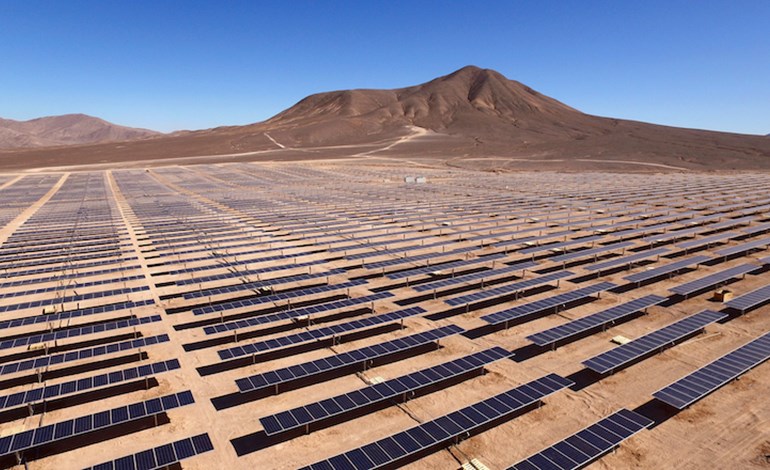
The first phase of Repsol Ibereólica Renovables Chile’s initial joint solar project in country is now producing electricity for the grid. Repsol and the Ibereólica Renovables Group’s JV Elena photovoltaic plant now has 76.8MW of installed capacity, extending to 596MW once the whole project is completed. Once fully operational, the Elena photovoltaic plant will generate enough renewable energy to supply more than 554,000 Chilean households and will prevent the emission of approximately 1.19 million tonnes of CO2 into the atmosphere. Repsol’s executive managing director of Low Carbon Generation João Paulo Costeira said: “Our partnership with the Ibereólica Renovables Group, a highly experienced partner with strong renewable energy capabilities, allows us to meet our growth and diversification goals in Chile, a country that offers us great potential for asset development and that will contribute to reaching our goal of 6000MW in operation by 2025.” Gregorio Álvarez, founder and president of the Ibereólica Renovables Group, added: “It is a great pleasure to be able to celebrate the start of electricity production from the Elena photovoltaic plant, the result of collaboration with Repsol, a partner that has once again demonstrated its commitment to the decarbonisation of the country and with whom we have managed to lay solid foundations on which to jointly develop a more sustainable future for Chile.” Credits: renews.biz[Image: Antonio Garcia/Unplash]

UK Hits Renewables Generation Record
The UK has hit a major milestone, passing one trillion kilowatt-hours (kWh) of electricity generated from renewable energy sources. The data from National Grid analytics reveals that it has taken 50 years to reach the milestone, and based on current projections, will take just over five years to reach the next trillionth kWh. Records began in 1970 when renewables represented 1.9% of total generation, with hydro being the main source at the time (4.5TWh). The data indicates that offshore and onshore wind and solar entered the generation mix in 2010, in line with the emergence of key pieces of legislation including the Energy Review in 2006 and the renewable energy directive in 2009. Last month April 2023, 46% of Britain’s electricity came from zero carbon sources according to the National Grid ESO’s monthly electricity statistics. The month also saw a new low carbon intensity record of 33g/kWh on 10 April with just 0.1% of generation from coal. Ben Wilson, interim president for National Grid Ventures, said: “This major milestone re-affirms the UK’s position as world leaders in renewable energy and highlights the vital role renewables play in our transition to a cleaner energy future. “Accelerating the delivery of renewable energy must continue to be a priority for a cleaner, more secure and more affordable energy future for everyone, but it requires the right framework to make it happen. “We are committed to working with government and our partners to make it a reality.” Credits: renews.biz [Image: National Grid]
UK Solar Farm Gets Green Light
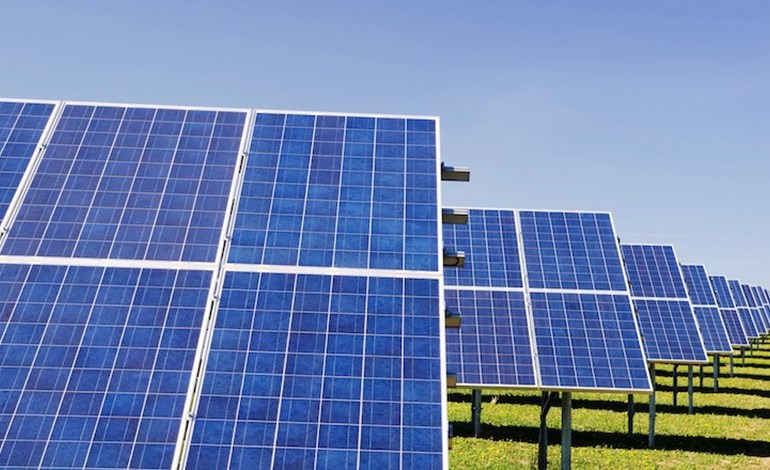
Planners have given the green light for a 30-hectare 16MW solar farm near the Shropshire village of Allbrighton in England. Being developed by Boultbee Brooks’ Renewable Energy arm and Infraland, County Lane Solar Farm will generate enough renewable energy to power approximately 5,000 homes, saving 3,600 tonnes of CO2 each year. Additionally, planting of species-rich grass, wildflowers and new hedgerows around the site will significantly benefit the environment by increasing the area’s net biodiversity by as much as 99%, the developer said. The JV partnership has now delivered 90MW of consented sites and is working on a further 300MW pipeline of similar projects across 16 UK developments. Boultbee Brooks managing director James Whitcher said: “Together with Infraland, we are working to develop a new portfolio of efficient and biodiverse solar parks across the UK. “We are delighted to have achieved consent for this project. Co-founding director of Infralan, Nick Barber added: “We are thrilled to have received another planning consent for our project at Albrighton. “We will be overseeing the construction, delivery and ongoing asset management, demonstrating our commitment to the project, which is due to commence in 2024.” Credits: renews.biz [Image: Zbynek Burival/Unplash]